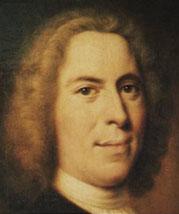
Nicolaus Ludwig
Biography
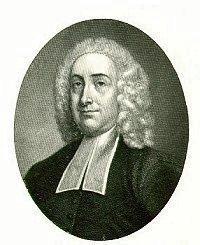
Nicolaus Ludwig, Count von Zinzendorf (1700–1760), was a German religious reformer, theologian, hymnwriter, and the second founder of the Moravian Church (the Unitas Fratrum). Born into a noble family in Dresden on May 26, 1700, he received a rigorous pietistic education at the Paedagogium in Halle and the University of Wittenberg. After briefly serving as a judicial councillor at the Saxon court in Dresden, Zinzendorf underwent a profound spiritual reorientation, eventually dedicating his vast wealth, aristocratic rank, and remaining life to global Christian renewal and missions. In 1722, he welcomed persecuted Moravian refugees onto his estate in Upper Lusatia, establishing the community of Herrnhut, which blossomed into an international missionary powerhouse. Zinzendorf was consecrated a bishop of the Moravian Brethren in Berlin in 1737 and spent decades traveling across Europe, Great Britain, and the Americas to preach and organize societies. He died at Herrnhut on May 9, 1760.
Zinzendorf was an extraordinarily prolific sacred poet, authoring more than two thousand hymns throughout his lifetime. His verse served as the emotional and theological heartbeat of the early Moravian movement. The central keynote of his poetry was an intense, passionate, and deeply personal devotion to the crucified Christ—a focus that occasionally veered into fervent, highly intimate imagery characteristic of 18th-century Pietism. While his vast output varied in literary quality, his finest compositions are distinguished by a noble simplicity, lyrical grace, absolute trust in divine reconciliation, and an ardent call to self-surrender and brotherly love.
Many of his hymns crossed over into broader German and English use, largely through the mediation of John Wesley (who was deeply influenced by Zinzendorf's theology and singing practices) and later Victorian translators such as Catherine Winkworth and Jane Borthwick.
Among his most prominent and enduring hymnological contributions are:
-
"Reiner Bräutgam meiner Seelen" ("Jesu, to Thee my heart I bow") — A classic expression of desire for holiness, translated by John Wesley in 1736.
-
"Grosser Bundes-Engel" ("Lord, when Thou saidst, So let it be") — A majestic Ascensiontide hymn.
-
"Ich bin ein kleines Kindelein" ("Saviour, who didst from Heaven come down") — A tender catechetical hymn for children, widely translated in England and America.
-
"Naht heran, ihr lieben Glieder" ("Friends in Jesus, now draw near") — A profound Holy Communion hymn translated by Jane Borthwick.
-
"Schau von deinem Thron" ("All glory to the Eternal Three") — Zinzendorf's poetic meditation on the Lord's Prayer, also translated by John Wesley.
Zinzendorf's hymns helped shape evangelical hymnody across the English-speaking and Germanic worlds, cementing his legacy as one of the most influential Protestant poets of the 18th century.
Hymns by Nicolaus Ludwig
Includes hymns they wrote and hymns where they are credited as co-author, translator, paraphraser, or adapter.
| # | Title | Year | Views | |
|---|---|---|---|---|
| 1 | Heart to Heart in Love United | circa. 1720s | 69 | View |
Recently added hymns
Updated hymnals
Suggestions or corrections: contact us.
Leave it in the forum for others to answer — hymn requests, lyrics help, writers, worship planning, and more.