John Dryden
Biography
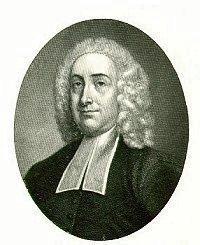
John Dryden was a monumental 17th-century English poet, dramatist, literary critic, and Poet Laureate who exerted a defining influence on English literature and hymnology. Born on August 9, 1631, in Aldwinkle All Saints, Northamptonshire, he was educated at Westminster School under Dr. Richard Busby and at Trinity College, Cambridge (B.A. 1854). Raised in a Puritan household, he initially celebrated the Commonwealth in his Heroic Stanzas on the death of Oliver Cromwell (1658), but embraced the Restoration of the monarchy in 1660, commemorating the return of Charles II with Astraea Redux. Appointed Poet Laureate and Historiographer Royal in 1670, Dryden dominated the English stage and established the heroic couplet as a primary poetic form. He transformed verse into a vehicle for political and religious discourse in masterpiece satires such as Absalom and Achitophel (1681), The Medal (1682), and Mac Flecknoe (1682).
Dryden's religious journey culminated in his formal reception into the Roman Catholic Church in 1685, a conversion he defended in his theological poem The Hind and the Panther (1687). His steadfast adherence to Catholicism following the Glorious Revolution of 1688 resulted in the loss of his court offices and financial security, compelling him to focus his final years on literary translations, most notably his celebrated rendering of Virgil (1697). He died on May 18, 1701, and was buried in Poets' Corner at Westminster Abbey.
In hymnology, Dryden holds a prominent position both for his confirmed masterworks and for his extensive attribution in historical Catholic hymnbooks. His most famous confirmed hymn contribution is his grand translation of the 9th-century Latin Pentecost sequence Veni Creator Spiritus, published as "Creator Spirit, by Whose aid" in 1693. Characterized by resonant dignity and poetic force, it became a standard invocation of the Holy Spirit across Anglican, Catholic, and Protestant hymnals worldwide.
Beyond his established works, hymnological scholarship—led by Orby Shipley and W. T. Brooke—attributes to Dryden the major share of the 120 metrical translations of Latin Office hymns appearing in The Primer, or Office of the B. V. Mary in English (1706). His recognized and attributed hymnological works include:
-
"Creator Spirit, by Whose aid" — His masterpiece translation of Veni Creator Spiritus, widely used across denominations.
-
"Thee, Sovereign God, our grateful accents praise" — A solemn rendering of the Te Deum, handed down via Sir Walter Scott's collection of Dryden manuscripts.
-
"O sylvan Prophet" — A translation of the Latin Vespers hymn for St. John the Baptist's Day (Ut queant laxis).
-
"Jesu, the only thought of Thee" — A classic C.M. rendering of St. Bernard's Jesu dulcis memoria, attributed to Dryden's late Primer revisions.
Dryden's translations bridged classical Latin liturgical hymnody and Augustan English verse, leaving a lasting legacy in English sacred poetry.
Dictionary of Hymnology
Drummond, William Hamilton; Dryden, John; Du ewiger Abgrund der seligen Liebe Biography
Completes W. H. Drummond’s hymns; outlines John Dryden’s life and the case for his 1706 Primer Latin translations; adds Zinzendorf’s “Du ewiger Abgrund,” Englished by Wesley.
ReadHymns by John Dryden
Includes hymns they wrote and hymns where they are credited as co-author, translator, paraphraser, or adapter.
| # | Title | Year | Views | |
|---|---|---|---|---|
| 1 | Creator Spirit, by whose aid (paraphraser) | 1693 | 42 | View |
Recently added hymns
Updated hymnals
Suggestions or corrections: contact us.
Leave it in the forum for others to answer — hymn requests, lyrics help, writers, worship planning, and more.