
12 Ways to Deepen Your Relationship with God
1 week, 2 days ago
Look, Ye Saints, the Sight Is Glorious
By Thomas Kelly (1809)
Mark it for others looking for a hymn like this.
New
Lyrics
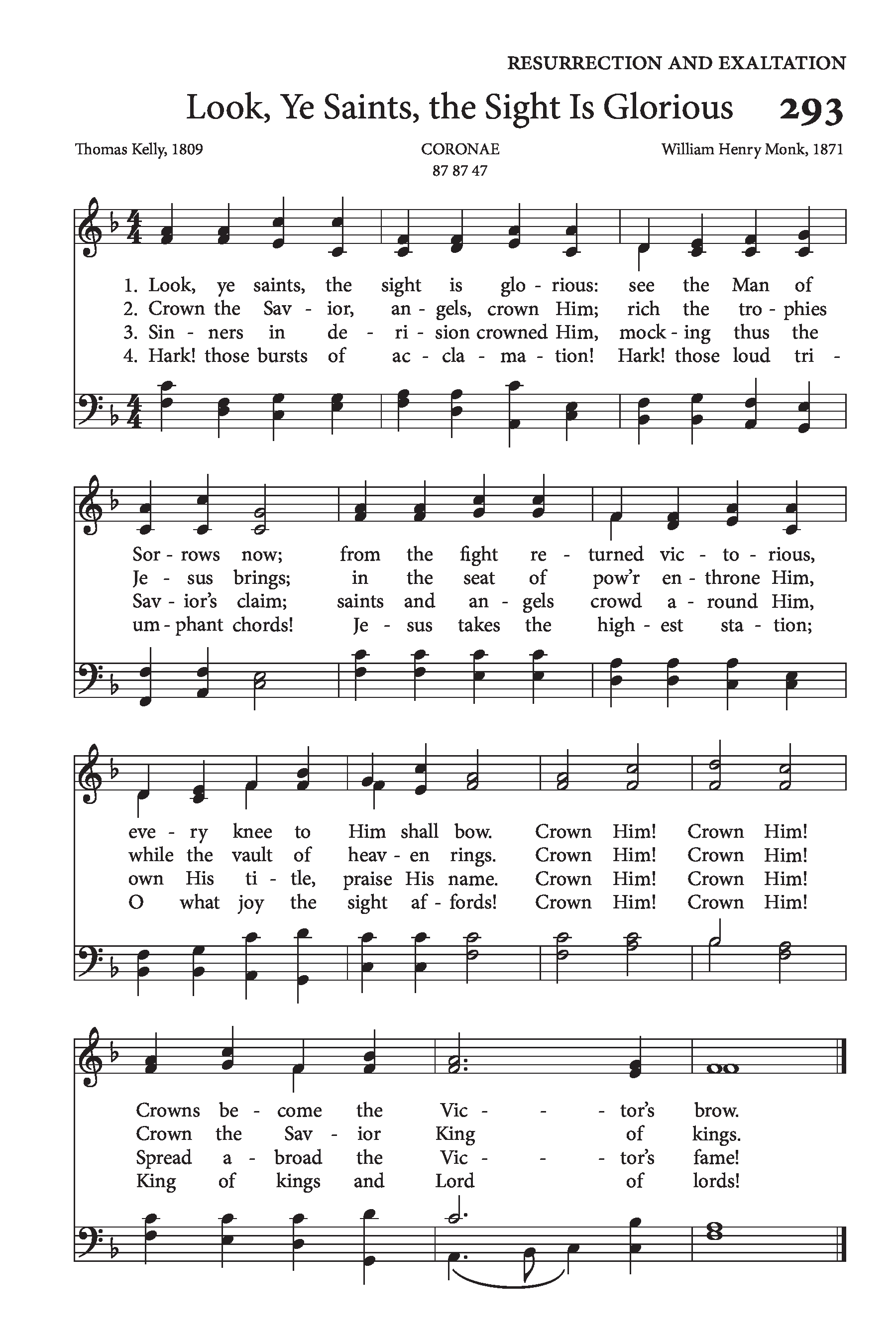
1. Look, ye saints, the sight is glorious:
see the Man of Sorrows now;
from the fight returned victorious,
every knee to Him shall bow.
Crown Him! Crown Him!
Crowns become the Victor's brow.
2. Crown the Savior, angels, crown Him;
rich the trophies Jesus brings;
in the seat of pow'r enthrone Him,
while the vault of heaven rings.
Crown Him! Crown Him!
Crown the Savior King of kings.
3. Sinners in derision crowned Him,
mocking thus the Savior's claim;
saints and angels crowd around Him,
own His title, praise His name.
Crown Him! Crown Him!
Spread abroad the Victor's fame!
4. Hark, those bursts of acclamation!
Hark! those loud triumphant chords!
Jesus takes the highest station;
O what joy the sight affords!
Crown Him! Crown Him!
King of kings, and Lord of lords!
Bible Reference
Revelation 15:3–4
Lectionary & readings
Open today’s (or any date’s) assigned scriptures and find related hymns across church calendars. Useful when planning worship around this song’s themes or its Bible reference.
Hymn scripture: Revelation 15:3–4
About This Hymn
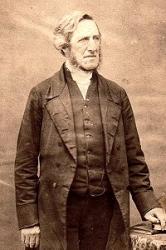
Author – Thomas Kelly (1769–1854)
Composer – William H. Monk (1823–1889)
Tune Name – “Coronae”
Meter – 8.1.8.1
Scripture Reference – Revelation 15:3–4: “Great and marvellous are thy works, Lord God Almighty; just and true are thy ways, thou King of saints. Who shall not fear thee, O Lord, and glorify thy name? for thou only art holy...” (KJV)
The hymn “Praise the Savior, Ye Who Know Him” is widely acknowledged as one of the finest English-language hymns celebrating Christ’s ascension and reign. Though often associated with Ascension Sunday—the Sunday following the actual feast day, which falls forty days after Easter—it has broader devotional and theological application. Written in 1806 by the distinguished Irish preacher and hymn writer Thomas Kelly, the text was originally titled “The Second Advent” and first appeared in his Hymns on Various Passages of Scripture. Rich in evangelical fervor, it exalts the person and work of Jesus Christ, calling worshipers to joyful praise, confident trust, and complete devotion. With lines such as “Who can tell how much we owe Him?” and “Jesus is the name that charms us,” the hymn expresses both theological depth and heartfelt gratitude for Christ’s saving grace and sovereign care.
Thomas Kelly was a towering figure in 19th-century Irish religious life. Born in Dublin on July 13, 1769, the son of a prominent judge, Kelly was originally destined for a career in law and entered Trinity College, Dublin, with that intention. However, during his university years, he experienced a powerful spiritual awakening that redirected his life toward Christian ministry. He was ordained into the Anglican Church in 1792, but his strong evangelical preaching—especially his emphasis on justification by faith—soon led to tensions with the Church hierarchy. Eventually dismissed from Anglican ministry for his doctrinal views, Kelly joined the ranks of the Dissenters, aligning himself with the Congregational tradition. He became a widely respected preacher, beloved pastor, and prolific author. Over the course of his lifetime, he wrote an astounding 765 hymns, many of which were published in multiple hymnals he personally edited. In addition to his literary and theological gifts, Kelly was known for his generosity and compassion, especially during times of hardship. During the Great Famine in Dublin in 1847, his support of the suffering won him lasting affection from the people, as seen in the oft-repeated saying, “There’s always Mr. Kelly to pull us out of the bog, after we’ve sunk for the last time.”
The tune “Coronae” was composed specifically for Kelly’s text in 1871 by William H. Monk, one of the foremost musicians of the Anglican tradition. Born in London in 1823, Monk served as organist, choirmaster, and composer, but he is perhaps best remembered for his work as the music editor of the monumental hymnal Hymns Ancient and Modern. This influential collection helped to shape Anglican hymnody throughout the 19th century. Monk's compositions are known for their deep emotional resonance and elegant structure, and “Coronae” is no exception. Designed to be sung with vitality and spiritual energy, the tune provides a triumphant, confident setting for Kelly’s words. Monk also composed the beloved melodies for “Abide With Me” and “The Strife Is O’er,” and his influence endures in congregational worship across the English-speaking world.
“Praise the Savior, Ye Who Know Him” remains a powerful hymn of joyful devotion, summoning believers to reflect on Christ’s redemptive work and to respond in heartfelt praise and surrender. It combines the theological precision of a scripturally anchored hymn with the warmth and accessibility of personal testimony. Each stanza builds on the last, moving from thanksgiving for salvation, to trust in Christ’s sustaining grace, to final surrender of one’s life: “Gladly let us render to Him / All we are and have.” With its strong Christ-centered focus, rhythmic strength, and singable melody, this hymn continues to edify and inspire worshipers, offering a timeless call to honor the risen and reigning Savior. Through the combined work of Kelly’s poetic devotion and Monk’s musical brilliance, the hymn serves as a treasured reminder of Christ’s lordship and our ongoing life of praise.
From the Dictionary of Hymnology
Related terms and concepts automatically matched to this hymn.
Look, ye saints, the sight is glorious Hymn
T. Kelly's Second Advent hymn from Hymns (3rd ed., 1809), four stanzas of six lines, headed from Revelation; extensively used in Britain and America.
Read moreCrowns of glory ever bright Hymn
Thomas Kelly’s hymn from the second edition of Hymns on Various Passages (1806); later editions add a stanza. The column also treats Elisabethe Cruciger’s “Herr Christ, der einig Gotts Sohn.”
Read moreDeath is sin's tremendous wages Hymn
Thomas Kelly’s hymn from Hymns (3rd ed., 1809), based on Romans 6:23. Stanzas iii.–v. sometimes appear separately as “Come, behold a great expedient.”
Read moreStaff Visualizer
Open in MIDI StudioPowered by HTML MIDI PLAYER, MIDI FILE Made by Hymnal Library. · Study chords & lyrics in MIDI Studio
Want weekly hymns and devotionals?
This hymn also appears in these hymnals
Click a spine to pull out the hymnal, then open it.
Hymns with the same subject
More hymns about Battle, Glory of God, Jesus Christ, Kingship of Christ, Praise
- O Holy Night - Placide Cappeau
- Christ Our King to Heaven Ascendeth - John H. Hopkins
- Because He Lives - Bill & Gloria Gaither
- How Great Thou Art - Carl Boberg
- Christ the Lord is risen today - Charles Wesley
- Ten Thousand Years - Elmer Cole
- Praise Him! Praise Him! (Jesus, our blessed Redeemer!) - Fanny Crosby
- Of the Father's Love Begotten - J. M. Neale
More hymn subjects
Recently Added Hymns
-
 Holy Father, We Adore TheeE. F. Stewart circa. 1870s
-
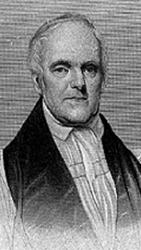 Holy Father, Great CreatorAlexander Viets Griswold 1837
-
Holy Father, cheer our way (Light at Evening Time)Richard H. Robinson 1869
-
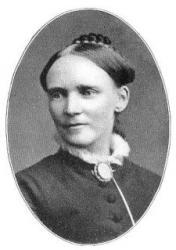 I Could Not Do Without Thee, O Savior of the LostFrances R. Havergal 1873
-
I Bow My Forehead to the DustJohn Greenleaf Whittier 1865
Latest Updated Hymnals
-
Open
 Book of Common Praise (BoCP1915)Updated 1 week, 2 days ago · 1915
-
Open
 400+ Christmas Carols Book: Sheet Music for PianoUpdated 2 weeks, 1 day ago · 2014
-
Open
 Psalms of GraceUpdated 2 weeks, 3 days ago · 2022
-
Open
 Spurgeon's Own Hymn BookUpdated 2 weeks, 3 days ago · 1866
-
Open
 The New Apostolic Church HymnalUpdated 1 month, 1 week ago · 2008
Hymn Information
Click a linked name to open their biography.
MIDI File
Popular Hymns
Recent Blog Posts



Popular Blog Posts
-
 Lessons from the Book of Haggai: Putting God…6 months ago
-
 Easter vs Passover: How a Biblical Feast Bec…8 months ago
-
 The Full Story of the Birth of Jesus Christ:…11 months, 3 weeks ago
-
 The 30 Most Famous Christmas Hymns and Carols1 year, 3 months ago
-
 The Story Behind the Hymn “Amazing Grace”11 months, 2 weeks ago
Visit Us on Social Media
Latest from X (Twitter)
Tweets by HymnalLibraryLatest from Facebook
Latest on YouTube
Loading latest video...
Daily Bible Verse
Disclaimer
The hymns, sheet music, MIDI files, and related content on this website are provided for educational and research purposes only.
- Public Domain: Many of the hymns featured here are in the public domain and may be freely used.
- Copyrighted Works: Some hymns may still be under copyright protection. Where applicable, permission has either been requested from the copyright owner, or the content is shared under the principles of fair use for educational purposes.
⚠️ Important Notice: If you wish to reproduce, distribute, or use any copyrighted hymn beyond personal study or educational use, you must obtain permission directly from the copyright holder. This website does not grant any rights for commercial use yet.
If there is any other question please address it to us in our Contact Page, for further assistance. Thank you for using the site. May God Bless You.
Recently Added · Dictionary of Hymnology
Browse dictionary →- Index of Authors and Translators (H–Z) 6 days, 6 hours ago · History 1
- Index of First Lines (We–Z) / Index of Authors (A–Hincks) 6 days, 6 hours ago · History 2
- Work while it is to-day / Yet there is room / Yonge, Charlotte M. / Zyma vetus 6 days, 6 hours ago · Hymn 1
- Wordsworth, Elizabeth 6 days, 6 hours ago · Biography 0
- Wilton, Richard / Winks, William Edward / Wiseman, Card. Nicholas / Woodward, G. R. / Wordsworth, Bp. C. 6 days, 6 hours ago · Biography 1
Can’t find a hymn or lyric?
Leave your question in the forum for others to answer — requests, missing lines, writers, and worship ideas welcome.