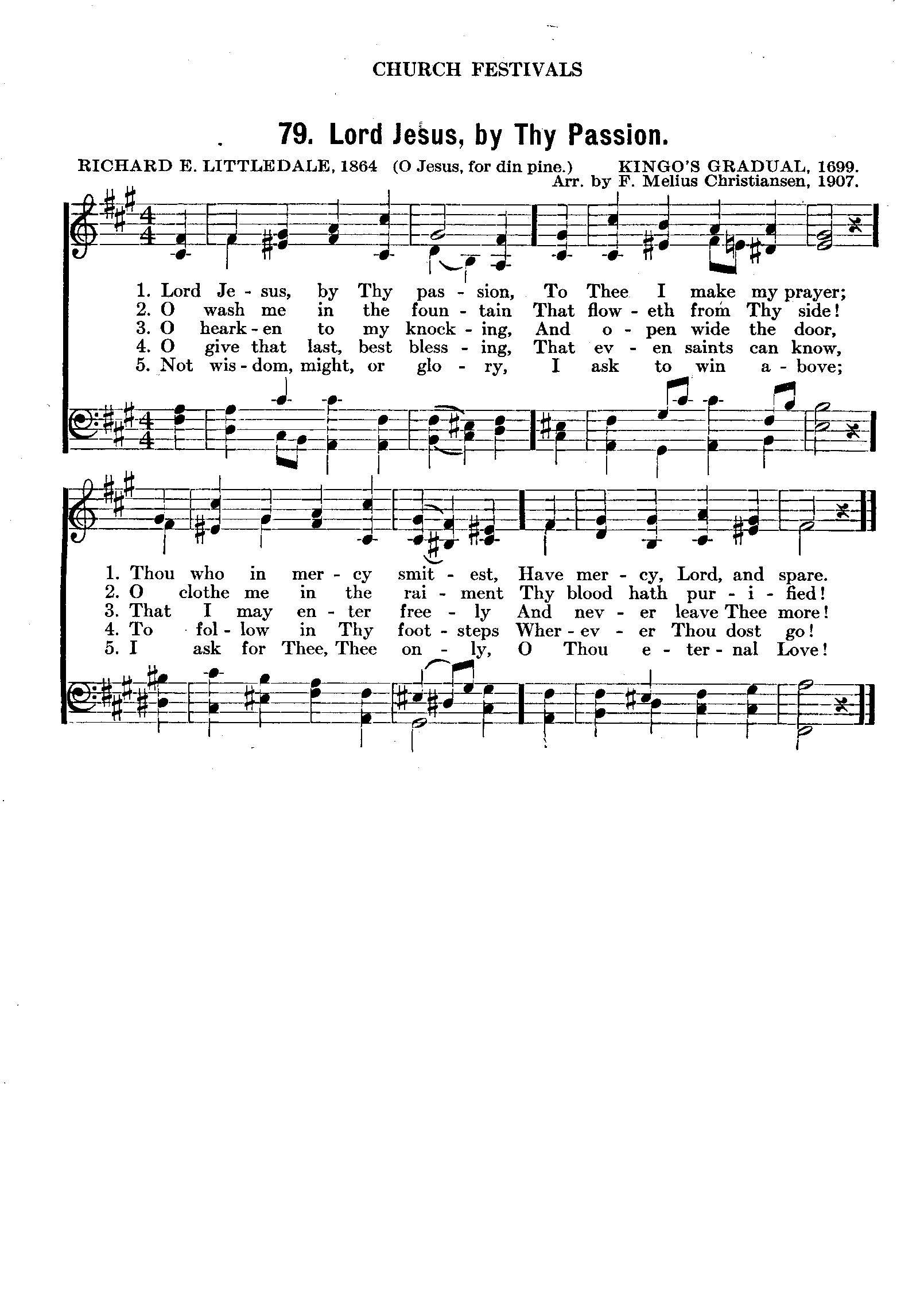


The Latin hymn "Gaude, Mater Ecclesia" is a medieval liturgical piece that has undergone significant contextual shifting across its manuscript and publication history. The text is structured in 6 stanzas of 4 lines each. It entered modern hymnological study primarily through nineteenth-century textual preservation and Anglo-Catholic translation movements.
Liturgical Origins and European Publication
The text was originally preserved in the Senlis Breviary (Breviarium Sylvanectense), printed in 1521. In that specific liturgical repository, the hymn was assigned to the feast of St. Louis, the King of France, under the rubric In Festo S. Ludovici Regis. The Latin text was recovered and reprinted in the nineteenth century by the English hymnologist Dr. John Mason Neale. He included the 24-line poem on page 233 of his collection Hymni Ecclesiae, published in 1551.
English Translation and Adaptations
In 1867, the text was translated into English by the prominent Anglo-Catholic scholar Dr. Richard Frederick Littledale. His translation opened with the first line, "O Mother Church, today thy voice."
When published, Littledale opted to mask his identity by using the cryptic pseudonym initials "A. L. P." The English text was included as entry Number 287 in The People's Hymnal of 1867. Along with the translation into English, the hymn experienced a notable liturgical reassignment. Rather than maintaining its historical association with the feast of St. Louis, the compilers appointed the hymn to be sung on October 13 for the Festival of St. Edward the Confessor, the King of England.
Related Hymns
Hymns in the library connected to this dictionary topic.
Related Hymn Sheets
3 shown at a time — use the arrows to browse all 1 sheet.
Related Authors
Writers connected to this dictionary topic.
Keywords
Related terms for this dictionary entry.
Recent Dictionary Entries
Newly added terms from the Dictionary of Hymnology.
If you notice any mistake or have suggestions, please contact us on our contact page.