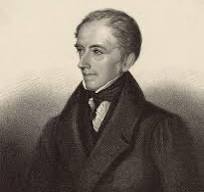

"Again the Lord of life and light" is an eighteenth-century Easter hymn written by the English poet, essayist, and hymnwriter Anna Laetitia Barbauld (née Aikin).
The eleven-stanza text in four-line stanzas was first contributed to Dr. William Enfield's Hymns for Public Worship (Warrington, 1772, No. LX) with the designation "For Easter Sunday." The following year, it was republished with revisions in her volume Poems (London: J. Johnson, 1773, pp. 118–120).
In his 1812 Collection, Dr. William Bengo Collyer divided the hymn into two distinct sections: Part I comprising stanzas I–IV, and Part II comprising stanzas V–IX and XI (omitting stanza X). The second part opened as Hymn 688 with the line "Jesus, the Friend of human kind," though this division eventually fell out of hymnal usage.
Several prominent centos compiled from the original text entered common congregational use across Great Britain and America:
-
Mercer's Selection (1st ed., 1854): Comprises stanzas I, II, VI, VIII, III, and IV, following the arrangement from Thomas Cotterill's Selection of Psalms and Hymns (8th ed., 1819) and James Montgomery's The Christian Psalmist (1825).
-
Hymnal Companion: Comprises stanzas I, II, VI, III, and IV, drawn from Edward Bickersteth's Christian Psalmody (1833) and John H. Gurney's Lutterworth Collection (1838) and Marylebone Collection (1851).
-
S.P.C.K. Psalms and Hymns (1852, 1869): Follows the same stanza arrangement as the Hymnal Companion version, with the addition of a concluding doxology.
-
Baptist Psalms and Hymns (1858, 1880): Consists of stanzas I–IV, taking Part I from Dr. Collyer's 1812 collection.
-
Islington Psalms and Hymns (1830–1862) and Kennedy (1863): Begins with the line "This day be grateful homage paid," comprising stanzas III, II, IV, VI, VIII, and IX.
The full original text was reprinted in Charles Rogers's Lyra Britannica (1867, pp. 35–36) and Lord Selborne's The Book of Praise (1862, pp. 61–62). The second cento was translated into Latin by the Rev. R. Bingham under the title Ecce! iterum Dominus vitae lucisque revelat, published in his Hymno-Cognata Latina (1871, pp. 85–87).
Related Authors
Writers connected to this dictionary topic.
Keywords
Related terms for this dictionary entry.
Recent Dictionary Entries
Newly added terms from the Dictionary of Hymnology.
If you notice any mistake or have suggestions, please contact us on our contact page.