



What Does It Mean to Be Overly Righteous? Un…
8 hours ago
Commit Thou All Thy Griefs
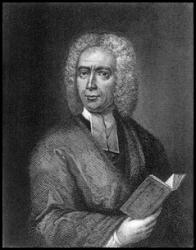
By John Wesley (1737)
Mark it for others looking for a hymn like this.
New
Lyrics
1. Commit thou all thy griefs
And ways into His hands,
To His sure truth and tender care,
Who earth and heaven commands.
And ways into His hands,
To His sure truth and tender care,
Who earth and heaven commands.
2. Who points the clouds their course,
Whom winds and seas obey,
He shall direct thy wandering feet,
He shall prepare thy way.
Whom winds and seas obey,
He shall direct thy wandering feet,
He shall prepare thy way.
3. Thou on the Lord rely,
So safe, shalt thou go on;
Fix on His work thy steadfast eye,
So shall thy work be done.
So safe, shalt thou go on;
Fix on His work thy steadfast eye,
So shall thy work be done.
4. No profit canst thou gain
By self-consuming care;
To Him commend thy cause, His ear
Attends the softest prayer.
By self-consuming care;
To Him commend thy cause, His ear
Attends the softest prayer.
5. Thy everlasting truth,
Father, Thy ceaseless love,
Sees all Thy children's wants, and knows
What best for each will prove.
Father, Thy ceaseless love,
Sees all Thy children's wants, and knows
What best for each will prove.
6. Thou everywhere hast sway,
And all things serve Thy might,
Thy every act pure blessing is,
Thy path unsullied light.
And all things serve Thy might,
Thy every act pure blessing is,
Thy path unsullied light.
Bible Reference
1 Peter 5:7; Psalm 55:22; Matthew 11:28-30; Philippians 4:6-7
Lectionary & readings
Open today’s (or any date’s) assigned scriptures and find related hymns across church calendars. Useful when planning worship around this song’s themes or its Bible reference.
Hymn scripture: 1 Peter 5:7; Psalm 55:22; Matthew 11:28-30; Philippians 4:6-7
About This Hymn
“Commit Thou All Thy Griefs” is a hymn translated by John Wesley, the founder of Methodism, in the 18th century. Wesley translated and adapted many German and Latin hymns for use in the English-speaking Methodist movement, seeking to provide congregations with texts that were both devotional and theologically rich. This hymn is a prayerful encouragement to trust God in times of sorrow and difficulty.
The central theme of the hymn is the believer’s reliance on God’s providence. It echoes 1 Peter 5:7, which instructs Christians to cast all their anxieties upon Him because He cares for them. The hymn urges the worshiper to surrender personal griefs, burdens, and anxieties to the Lord, recognizing His wisdom, power, and loving concern.
Another key emphasis is consolation through Christ’s presence. Drawing from Matthew 11:28-30, the hymn reassures the believer that the Savior provides rest for the weary and heavy-laden. It highlights that faith is not merely intellectual assent but a practical reliance on God’s promises, offering spiritual relief amid life’s trials.
The tone of the hymn is gentle, pastoral, and meditative. Its phrasing encourages introspection and private devotion while remaining suitable for congregational singing. The repeated invitation to “commit” griefs reinforces the practice of prayer as both a refuge and a source of strength.
Musically, the hymn is often set to calm and flowing tunes typical of 18th-century English hymnody, supporting its reflective character. The text has been cherished in Methodist and wider Protestant hymnals for its simplicity, scriptural foundation, and comforting message.
“Commit Thou All Thy Griefs” continues to serve as a source of spiritual encouragement, reminding believers that in every trial, their burdens can be entrusted to a loving and sovereign God who sustains and restores His children.
From the Dictionary of Hymnology
Related terms and concepts automatically matched to this hymn.
Christi Blut und Gerechtigkeit Hymn
Zinzendorf’s long redemption hymn of 1739; Wesley’s free “Jesu, Thy blood and righteousness” became the standard English form, with many centos and first-line variants.
Read moreHow happy is the pilgrim's lot Hymn
Wesley Redemption hymn (1747; nine stanzas); long popular with Methodists. Authorship between John and Charles remains an open question in the Wesleyan Hymn Book.
Read moreBehold the throne of grace Hymn
John Newton’s Olney Hymn (1779) on 1 Kings iii. 5; widely used in abridged form. Wesley printed the last four stanzas in 1781 as “Since ’tis the Lord’s command.”
Read moreStaff Visualizer
Open in MIDI StudioPowered by HTML MIDI PLAYER, MIDI FILE Made by Hymnal Library. · Study chords & lyrics in MIDI Studio

Want weekly hymns and devotionals?
This hymn also appears in these hymnals
Click a spine to pull out the hymnal, then open it.
More hymn subjects
Latest Updated Hymnals
-
Open
 Book of Common Praise (BoCP1915)Updated 2 days, 2 hours ago · 1915
-
Open
 400+ Christmas Carols Book: Sheet Music for PianoUpdated 2 days, 2 hours ago · 2014
-
Open
 Psalms of GraceUpdated 3 days, 10 hours ago · 2022
-
Open
 Spurgeon's Own Hymn BookUpdated 3 days, 12 hours ago · 1866
-
Open
 The New Apostolic Church HymnalUpdated 3 weeks, 4 days ago · 2008
Hymn Information
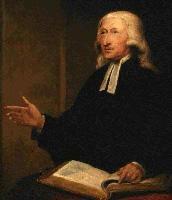
Click a linked name to open their biography.
MIDI File
More Hymns by John Wesley
Popular Hymns
Recent Blog Posts


Popular Blog Posts
-
 Lessons from the Book of Haggai: Putting God…5 months, 2 weeks ago
-
 Easter vs Passover: How a Biblical Feast Bec…7 months, 2 weeks ago
-
 The Full Story of the Birth of Jesus Christ:…11 months, 1 week ago
-
 The 30 Most Famous Christmas Hymns and Carols1 year, 2 months ago
-
 The Story Behind the Hymn “Amazing Grace”11 months ago
Visit Us on Social Media
Latest from X (Twitter)
Tweets by HymnalLibraryLatest from Facebook
Latest on YouTube
Loading latest video...
Daily Bible Verse
Disclaimer
The hymns, sheet music, MIDI files, and related content on this website are provided for educational and research purposes only.
- Public Domain: Many of the hymns featured here are in the public domain and may be freely used.
- Copyrighted Works: Some hymns may still be under copyright protection. Where applicable, permission has either been requested from the copyright owner, or the content is shared under the principles of fair use for educational purposes.
⚠️ Important Notice: If you wish to reproduce, distribute, or use any copyrighted hymn beyond personal study or educational use, you must obtain permission directly from the copyright holder. This website does not grant any rights for commercial use yet.
If there is any other question please address it to us in our Contact Page, for further assistance. Thank you for using the site. May God Bless You.
Recently Added · Dictionary of Hymnology
Browse dictionary →
Can’t find a hymn or lyric?
Leave your question in the forum for others to answer — requests, missing lines, writers, and worship ideas welcome.