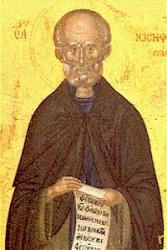
St. Joseph the Hymnographer
Biography
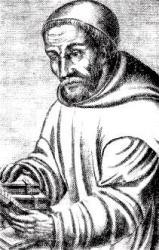
St. Joseph the Hymnographer (c. 816–886) was one of the most important hymn writers of the early Byzantine Church and is widely regarded as one of the greatest hymnographers in Eastern Christian tradition.
Background and life
He lived during the Byzantine period and was a monk associated with Constantinople. His life was marked by exile and hardship, especially during periods of iconoclastic controversy in the Eastern Roman Empire, when the use of religious images was fiercely opposed by certain rulers and theologians.
He eventually became closely associated with monastic centers in Constantinople, particularly the Studion Monastery tradition, which was a major hub of hymn writing and liturgical development.
Why he is called “the Hymnographer”
Joseph earned the title because of the extraordinary volume and quality of hymns he composed for the Orthodox liturgical cycle. Tradition attributes hundreds of canons and hymns to him, though not all can be historically verified.
A canon in Eastern liturgy is a structured hymn composed of nine odes, each based on biblical canticles, and used in services such as Matins.
Contributions to Christian hymnody
-
He helped shape the Byzantine canon form, which became central to Eastern Orthodox worship.
-
He wrote hymns for major feasts such as Pascha (Easter), Christmas, and saints’ commemorations.
-
His work emphasizes repentance, resurrection hope, and the glory of Christ.
-
Many of his hymns are still used in the Orthodox Church today, especially in the Octoechos and Menaion liturgical books.
Spiritual emphasis
His hymns are known for:
-
Deep biblical imagery
-
Strong Christ-centered theology
-
Themes of resurrection victory
-
Calls to repentance and spiritual awakening
Legacy
St. Joseph stands alongside other major Byzantine hymnographers like St. Romanos the Melodist. His work helped define the sound and theology of Eastern Christian worship for over a millennium.
He is commemorated as a saint in the Eastern Orthodox Church, honored not only as a poet but as a theologian through song, shaping worship through lyrical doctrine rather than abstract writing.
Dictionary of Hymnology
Ἀνέστης τριήμερος Hymn
St. Joseph the Hymnographer’s Canon for Ascension Day, written about the middle of the ninth century and regarded as his greatest work. Dr. Neale’s translation appeared in Hymns of the Eastern Church, 1862.
ReadHymns by St. Joseph the Hymnographer
Includes hymns they wrote and hymns where they are credited as co-author, translator, paraphraser, or adapter.
| # | Title | Year | Views | |
|---|---|---|---|---|
| 1 | O Happy Band of Pilgrims | 1862 | 1192 | View |
Recently added hymns
Suggestions or corrections: contact us.
Leave it in the forum for others to answer — hymn requests, lyrics help, writers, worship planning, and more.