Phoebe H. Brown
Biography
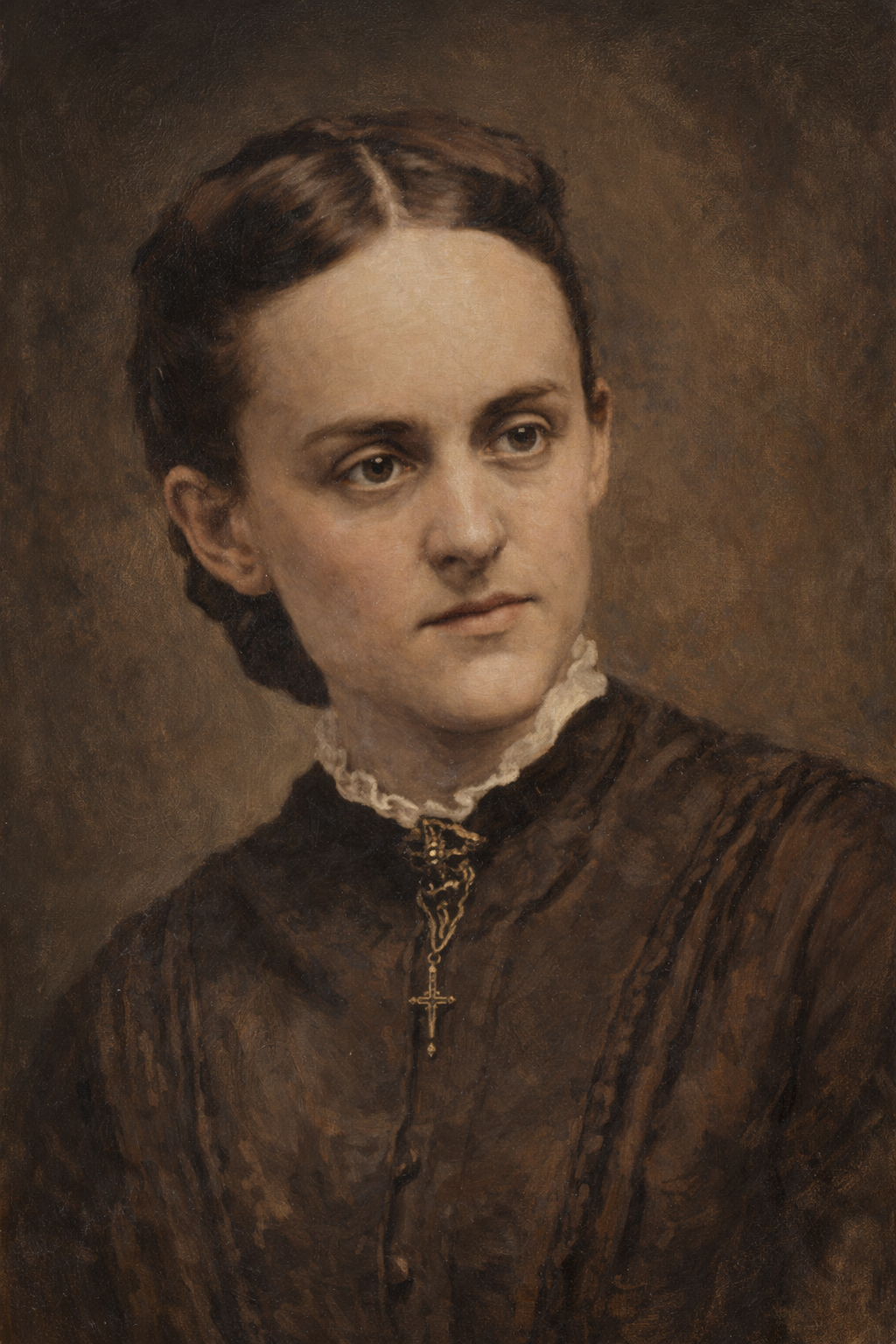
Phoebe Hinsdale Brown (1783–1861) holds a monumental position in the history of American sacred music, recognized by hymnologists as the first major native-born American female hymnwriter. Her extensive body of work is all the more remarkable given a life defined by systemic poverty, profound personal tragedy, and severe early childhood abuse. Born in Canaan, New York, she was tragically orphaned at the tender age of two. By age nine, she was placed in the care of a relative who operated a county jail. This environment subjected her to years of intense, cruel physical and emotional deprivation, a period of heavy toil so brutal that her children later remarked it broke their hearts to read her private journals. Escaping this bondage at age eighteen, she was taken in by compassionate neighbors who funded her first three months of formal schooling at Claverack, New York. There, she finally learned to read and write, and subsequently made a public profession of her Christian faith.
In 1805, Phoebe married Timothy H. Brown, a house painter, and the couple embarked on a nomadic life across New England and the Midwest, living in Connecticut, Massachusetts, and eventually Illinois. Despite a lifetime of grinding financial hardship, Brown was revered as a deeply devoted wife, mother, and intercessor. Her spiritual legacy extended through her family: her son, the Reverend Dr. Samuel Robbins Brown, became the historic first American missionary to Japan, and two of her grandchildren followed in the exact same mission field.
Brown’s entry into formal hymnology occurred when four of her texts were accepted into Asahel Nettleton’s landmark compilation, Village Hymns (1824), signed simply with the initial "B." Her writing style was noted for its deeply personal, experimental, and warm devotional quality, which contrasted sharply with the stiffer, objective theological metered prose common in early 19th-century America. Over her career, she published works covering a wide array of specialized ministries, including pieces for domestic missions ("Go, messenger of love, and bear"), the corporate celebration of young converts ("Welcome, ye hopeful heirs of heaven"), maternal prayer ("Great God, we would to Thee make known"), and seafaring ministries ("We come, O Lord, before Thy throne"). Later in life, around 1857, she was specifically commissioned to write "Jesus, this mid-day hour" for the famous Fulton Street Noon Prayer Meeting in New York City, which catalyzed a major national spiritual awakening.
Her absolute masterpiece, however, is the deeply moving devotional hymn, "I love to steal awhile away." The history behind this text is one of the most poignant narratives in hymnology. In 1818, while living in Ellington, Connecticut, Brown was caring for four small children and a severely ill sister in a tiny, unfinished house. The home lacked any private space, above or below, where she could retire for solitary prayer. Nearby stood the finest mansion in the neighborhood, featuring a large, beautiful garden. At dusk, after finishing her daily chores, Brown would walk toward the edge of this property, finding solace in the fragrance of the flowers and quiet communion with God.
One evening, the wealthy mistress of the mansion rudely confronted her, misconstruing her presence and sharply demanding to know why she lingered near the house instead of coming in to ask for handouts. Deeply wounded by the harsh confrontation, Brown returned to her crowded home. That night, after tucking her children into bed, she sat alone in the kitchen with her infant in her arms and wept bitterly. Channeling her grief into poetry, she penned a nine-stanza defense titled "An Apology for my Twilight Rambles, addressed to a Lady, Aug. 1818."
The second stanza of that poem became the basis for her famous hymn:
"I love to steal awhile away From every cumbering care, And spend the hours of setting day In humble, grateful prayer."
Abbreviated and polished for the Village Hymns in 1824, the text became an instant, massive success across the United States and Great Britain. It was paired with the tender, flowing tune WOODSTOCK by Thomas Hastings, which perfectly captured the quiet, twilight intimacy of the words.
Brown passed away on October 10, 1861, in Marshall, Illinois. Though she faced immense cultural and educational disadvantages, her innate poetic talent and resilient faith allowed her to transmute personal grief into a timeless anthem of interior prayer, cementing her legacy as the pioneering matriarch of American women's hymnody.
Hymns by Phoebe H. Brown
Includes hymns they wrote and hymns where they are credited as co-author, translator, paraphraser, or adapter.
| # | Title | Year | Views | |
|---|---|---|---|---|
| 1 | I Love to Steal Awhile Away | 1818 | 1116 | View |
Recently added hymns
Suggestions or corrections: contact us.
Leave it in the forum for others to answer — hymn requests, lyrics help, writers, worship planning, and more.