Phoebe Cary
Biography
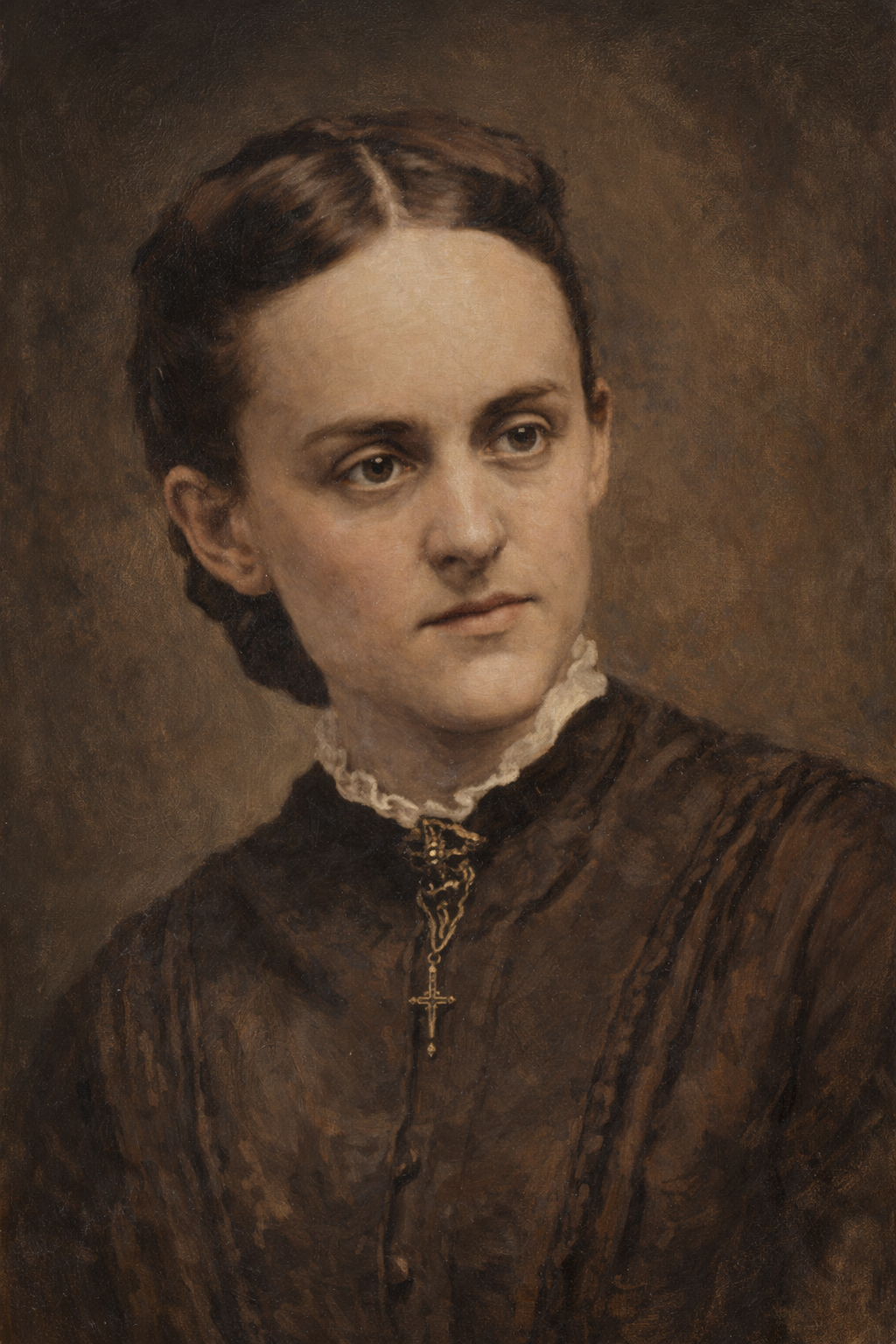
Phoebe Cary (1824–1871) was a celebrated 19th-century American poet, hymnwriter, and early advocate for women's rights who, alongside her older sister Alice, formed one of the most prominent literary partnerships in post-colonial American history. Born on a farm near Mount Healthy in Hamilton County, Ohio (just outside Cincinnati), Cary grew up in a rugged, rural environment. Her grandfather, a veteran of the Continental Army, had been granted the Ohio land as a reward for his military service in the Revolutionary War. Despite having very limited access to formal education, both Phoebe and Alice possessed an innate, fierce literary talent. From their teenage years onward, the sisters began writing deeply moving poetry and submitting their verses to various religious and secular periodicals, gradually building a shared national reputation.
Following the deaths of their mother and sister, and navigating a difficult relationship with their stepmother, Alice moved to New York City in 1850 to pursue a full-time literary career. Phoebe followed her two years later, in 1852. In New York, the Cary sisters established an incredibly vibrant, legendary literary salon in their home. Every Sunday evening for over twenty years, their residence became the intellectual epicenter of the city, attracting the finest creative minds of the era, including Horace Greeley, Oliver Wendell Holmes, Bayard Taylor, and P. T. Barnum. While Alice was generally regarded as the more melancholy and romantic of the duo, Phoebe was widely celebrated for her sharp wit, her brilliant parodies, and her deeply grounded, resilient spiritual outlook.
As a hymnologist, Cary made enduring contributions to the church's musical vocabulary. In 1869, she partnered with the prominent Methodist minister Dr. Charles F. Deems to compile Hymns for All Christians, a highly progressive collection explicitly designed to foster cross-denominational unity. Her own poetry was subsequently gathered into landmark volumes such as Poems and Parodies (1854) and Poems of Faith, Hope, and Love (1868). Her shorter works featured in collections like Lyra Sacra Americana, showcasing popular pieces like "Go and sow beside all waters" (a stirring call to Christian service and evangelism), "Great waves of plenty rolling up" (an expression of corporate gratitude), and "I had drunk, with lips unsated."
Cary’s permanent crowning achievement in sacred music, however, is her sublime masterpiece, "One sweetly solemn thought." For decades, encyclopedias incorrectly claimed she wrote this iconic poem at the age of seventeen. However, church records and Cary's own testimony later clarified that she composed it in 1852 at the age of twenty-eight, written on a Sunday morning in a small, third-story bedroom upon her return from a church service. The poem was completely personal and never intended for public singing; in fact, its irregular, asymmetrical meter made it notoriously difficult to set to a standard musical rhythm.
Despite these structural hurdles, the text's profound emotional resonance—comfortingly viewing death not as a terrifying chasm, but merely as being "nearer my home today than I ever have been before", won the hearts of the public. Editors eventually adjusted the meter to fit standard musical phrasing, pairing it with the beautiful tune AMBROSE by Robert S. Ambrose. The hymn's global popularity exploded in Great Britain and across America when it was adopted by the legendary evangelistic duo of Dwight L. Moody and Ira D. Sankey, who used it as a powerful, comforting staple during their massive revival campaigns.
The bond between the Cary sisters remained unbreakable until the very end. When Alice died of tuberculosis in February 1871, a grief-stricken Phoebe acted as her primary caregiver, completely exhausting her own health in the process. Phoebe contracted a severe illness and passed away less than six months later, on July 31, 1871, in Newport, Rhode Island, at the age of forty-six. She left behind a legacy as a brilliant trailblazer of the mid-19th-century American literary renaissance, whose private Sabbath morning reflection provided millions of grieving believers with an enduring, triumphant vocabulary of heavenly anticipation.
Hymns by Phoebe Cary
Includes hymns they wrote and hymns where they are credited as co-author, translator, paraphraser, or adapter.
| # | Title | Year | Views | |
|---|---|---|---|---|
| 1 | One Sweetly Solemn Thought | 1852 | 1012 | View |
Recently added hymns
Suggestions or corrections: contact us.
Leave it in the forum for others to answer — hymn requests, lyrics help, writers, worship planning, and more.