About Lucy Rider Meyer
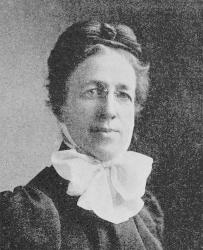
Lucy Rider Meyer was a visionary American educator, physician, and social reformer who fundamentally reshaped the role of women in the Methodist Church. Born in Vermont in 1849, her life was marked by an insatiable intellectual curiosity that led her to study at Oberlin College, M.I.T., and eventually the Women’s Medical College of Chicago, where she earned her M.D. in 1887. Though her early dreams of being a medical missionary were diverted by personal tragedy, she channeled her energy into a new mission: the professional and spiritual empowerment of women.
In 1885, alongside her husband, Josiah Shelley Meyer, she founded the Chicago Training School for City, Home, and Foreign Missions. Under her leadership as principal, the school became a pioneering institution, offering women a rigorous curriculum that spanned theology, sociology, and medical training. Meyer is most famously credited with the revival of the Deaconess movement within the Methodist Episcopal Church. She envisioned a dedicated corps of women, professionally trained and identifiable by a distinct uniform, who would minister to the "unfortunates" in urban tenement communities. Her advocacy led to the official recognition of the office of deaconess by the church in 1888, and she later documented this journey in her seminal work, Deaconesses: Biblical, Early Church, European, American (1889).
While Meyer was a formidable administrator and the founder of some forty institutions—including hospitals and orphanages—she was also a creative communicator. She edited The Deaconess Advocate for three decades and even authored a charming introductory science book for children titled The Fairy Land of Chemistry. Her theological outlook was notably progressive for her time; while her husband taught a literal interpretation of the Bible, Lucy maintained a more liberal perspective, believing in a faith that evolved alongside social and scientific understanding.
Despite the "divergent opinions" that eventually led to her retirement from the training school in 1917, her impact was undeniable: the school had graduated over 5,000 students by the time she stepped down. Lucy Rider Meyer died in Chicago in 1922, leaving behind a legacy as a "mother of deaconesses" and a champion for women’s right to a formal, active, and professional role in the work of the Gospel. Today, the institutions she initiated stand as a testament to her belief that faith must be paired with practical, educated service to the community.