About Katharine von Schlegel
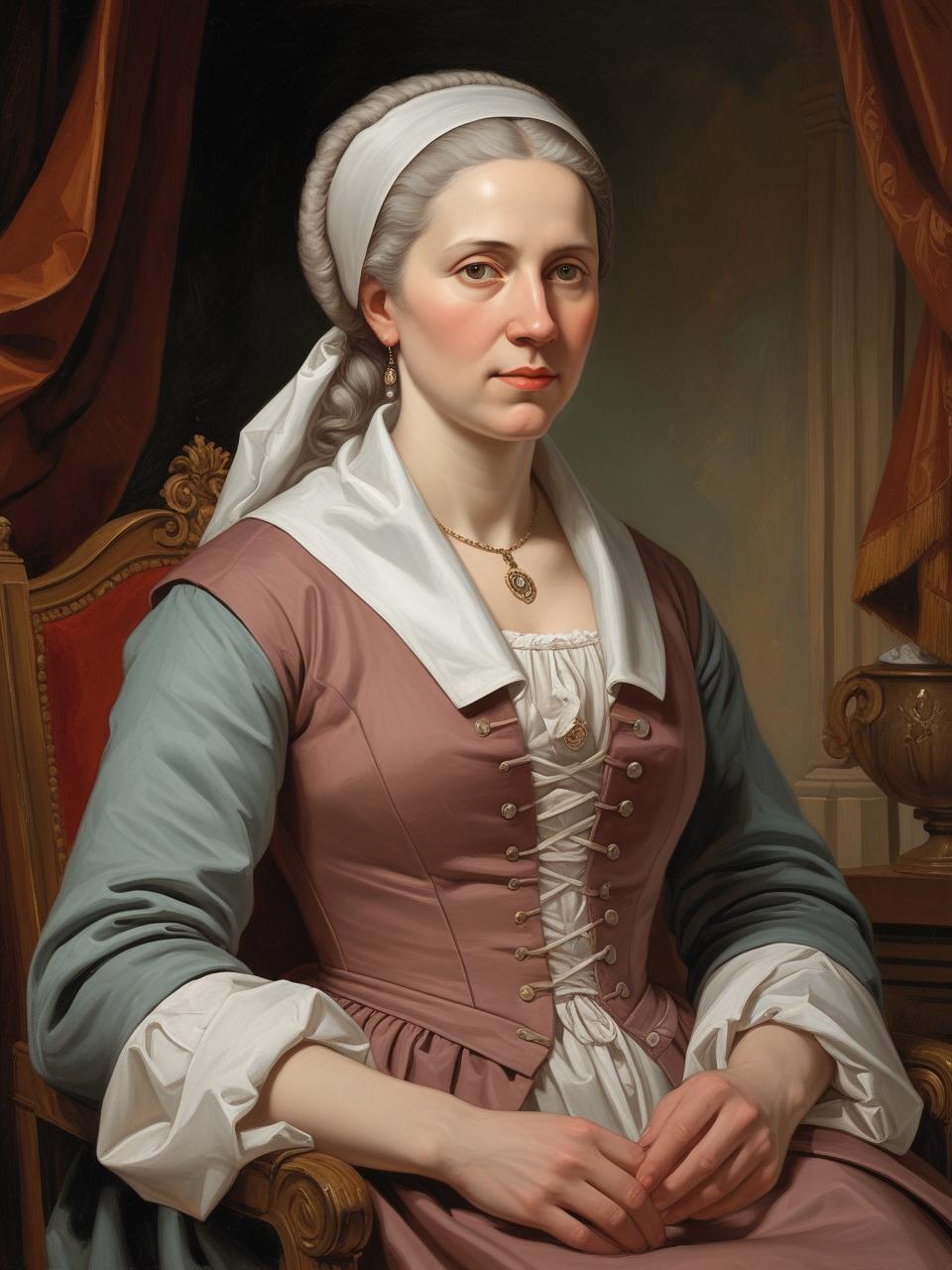
Kathrina von Schlegel was a prominent German hymn writer associated with the Pietist movement within the Lutheran Church in the 18th century. Born Catharina Amalia Dorothea von Schlegel in 1697, she lived much of her life in Cöthen, an area notable for its vibrant musical and religious history. While historical records are sparse, she was likely a "Stiftsfräulein," a member of a Protestant house for noblewomen, or a lady attached to the ducal court at Cöthen. Her correspondence with Count Heinrich Ernst of Stolberg in the early 1750s suggests she was well-connected within the circles of German nobility and deeply engaged in the spiritual literature of her time.
She is immortalized in the English-speaking world almost exclusively for a single hymn, "Stille, mein Wille, dein Jesus hilft siegen," known in English as "Be Still, My Soul." First published in 1752 in a collection of spiritual songs, the hymn is a profound meditation on patience, trust, and divine consolation during times of suffering. It remained relatively obscure in the English tradition until it was translated in 1855 by Jane Borthwick for the collection Hymns from the Land of Luther. Borthwick’s translation captured the earnest, personal devotion of the original German text, making it a staple for those seeking comfort in "cross and consolation."
The enduring popularity of the hymn is also deeply tied to its musical setting. In the 20th century, it became common practice to pair Schlegel's words with the "Finlandia" theme from the symphonic poem by Jean Sibelius. This somber yet triumphant melody perfectly underscores the hymn’s themes of enduring the "thorny path" and the eventual "joyful meeting" in eternity. The combination has made "Be Still, My Soul" one of the most frequently requested hymns for funerals and times of national mourning.
Despite her lack of a detailed public biography, Kathrina von Schlegel’s legacy as a "Quiet in the Land" remains secure through her poetry. Her writing reflects a hallmark of Pietism: the shift from formal, dogmatic religion to a "religion of the heart" that emphasizes an intimate, trusting relationship with Jesus. When she died in 1777, she left behind a text that continues to serve as a rhythmic prayer for the "changeful hour," encouraging believers to wait patiently for the time when "disappointment, grief, and fear are gone."