About Karl Johann Philipp Spitta
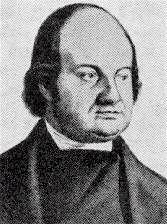
Karl Johann Philipp Spitta was one of the most beloved German hymn writers of the 19th century, often described as the "Keble of Germany" for his role in reviving evangelical piety. Born in Hannover in 1801, Spitta’s early life was marked by hardship; a four-year severe illness beginning at age eleven derailed his initial education, leading his family to apprentice him to a watchmaker. However, his heart remained in the ministry, and following the death of a younger brother who had been preparing for ordination, Spitta was given the opportunity to take his place. He pursued his theological studies at the University of Göttingen, where he famously shared a friendship with the poet Heinrich Heine until Heine’s irreverent jests regarding sacred matters caused a permanent rift.
Around 1824, Spitta experienced a profound spiritual transformation, after which he famously declared, "To the Lord I consecrate my life and my love, and likewise my song." He moved away from secular poetry and dedicated his literary talents exclusively to the praise of Christ. His professional career saw him serve as a tutor and later as a Lutheran pastor and superintendent in various regions of Hannover, including Hameln and Burgdorf. His hymns were often composed in the quiet evenings after long days of pastoral work, frequently while he sat at his piano or harp. Spitta died suddenly in 1859 of "cramp of the heart" (a heart attack) while sitting at his writing table, just weeks after moving to his final post in Burgdorf.
Spitta’s fame rests primarily on his collection Psalter und Harfe (Psalter and Harp), first published in 1833. The hymns within are characterized by a "childlike piety," refined diction, and a sweet, flowing melody that made them perfectly suited for family and private devotions. His work played a vital role in the mid-19th-century revival of Evangelical religion in Germany, moving away from the cold rationalism of previous decades toward a deeply personal, subjective relationship with the Savior. His popularity was further bolstered by the numerous musical settings composed for his texts, with his hymn on the "Angel of Patience" becoming a particular favorite.
Many of Spitta's hymns remain staples in both German and English-speaking traditions. Among his most significant works are:
-
"We Are the Lord's; His All-Sufficient Merit" (Wir sind des Herrn): A powerful hymn of assurance based on Romans 14:8.
-
"By the Holy Hills Surrounded" (Gottes Stadt steht festgegründet): A majestic rendering of the "City of God" based on Psalm 87.
-
"I and My House Are Ready, Lord" (Ich und mein Haus, wir sind bereit): A quintessential family hymn of consecration.
-
"O Come, Eternal Spirit" (O komm, du Geist der Wahrheit): A significant Whitsuntide (Pentecost) hymn.
-
"Our Conversation Is in Heaven" (Unser Wandel ist im Himmel): A meditation on the Christian life as a journey toward a heavenly home.
Spitta’s legacy is that of a "Quiet in the Land" whose verses provided a faithful mirror of inner Christian experience. His hymns do not typically address complex dogmatic arguments but rather the "eternal verities" of faith, love, and resignation to God's will. When he was buried in 1859, the congregation sang his own "Song of Dying" (Stimm’ an das Lied vom Sterben), a fitting tribute to a man who had spent his life tuning the hearts of others to the melodies of heaven.