About Joseph Augustus Seiss
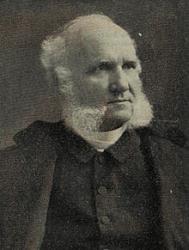
Joseph Augustus Seiss (1823–1904)
Joseph Augustus Seiss was a towering figure in 19th-century American Lutheranism, remembered as an eloquent preacher, a prolific author, and a significant contributor to English hymnody. Born into a Moravian family in Graceham, Maryland (with the original surname "Seuss"), Seiss eventually found his spiritual home in the Lutheran Church. His education was a blend of formal study at Pennsylvania College in Gettysburg and extensive private tutoring, leading to his ordination in 1842. After serving various pastorates in Virginia and Maryland, he moved to Philadelphia, where he spent nearly half a century leading the congregations of St. John's and later the Church of the Holy Communion.
Seiss was a man of immense literary energy, authoring over eighty volumes during his lifetime. While his scholarly work often focused on eschatology, notably his 1856 work The Last Times, and liturgical lectures, he is most widely recognized today for his contributions to the "Service of Song." He was a key figure in the compilation of several major hymnals, including The Evangelical Psalmist (1859). His work was characterized by a desire to bring the rich theological heritage of German and Moravian hymnody into the English-speaking world, ensuring that Lutheran worship remained both doctrinally sound and emotionally resonant.
His most famous contribution to the church is undoubtedly his translation and arrangement of the "Crusaders' Hymn," known as "Beautiful Savior." While the melody and original German text ("Schönster Herr Jesu") have older roots, Seiss’s English version, published in 1873, captured the hearts of believers across denominations. His verses, which celebrate Christ as the "King of Creation" and "Son of God and Son of Man," are noted for their simple beauty and rhythmic grace. Seiss also famously added a fourth stanza to the hymn "Lead, Kindly Light," reflecting his belief that a hymn of guidance should conclude with a clear focus on the destination of the soul in heaven.
In addition to his translations, Seiss was a gifted original poet. His hymns often focused on the themes of Christ’s presence, the beauty of the Sabbath, and the anticipation of the Second Advent. He remained a leader in the General Council of the Lutheran Church in North America until his death in 1904. Today, his legacy lives on every time a congregation sings of the "Beautiful Savior," a testament to his ability to translate ancient truths into a living, musical language.