About John Nelson Darby
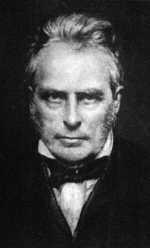
John Nelson Darby (1800–1882)
John Nelson Darby was a formidable theologian, linguist, and the most influential figure in the early development of the Plymouth Brethren movement. Born in Westminster and educated at Trinity College, Dublin, Darby originally embarked on a legal career before being ordained as a priest in the Church of Ireland. However, disillusioned by the state of the established church and its relationship with the government, he soon left to join a circle of like-minded believers in Dublin. This group eventually became the "Brethren," and Darby’s leadership, characterized by a rigorous commitment to biblical literalism and a "waiting for the Lord," helped the movement spread globally. A tireless worker, he translated the entire Bible into English, French, and German, and his Synopsis of the Books of the Bible remains a significant reference in dispensationalist theology.
In the world of hymnody, Darby's contributions were largely anonymous, reflecting the Brethren’s emphasis on the "gathering of the saints" rather than individual accolades. He was the primary editor of the seminal 1856 collection, A Few Hymns and Some Spiritual Songs Selected for the Little Flock, a book that defined the musical identity of the movement. His hymns are notable for their intense focus on the person of Christ, the unchanging nature of divine love, and the "pilgrim" status of the believer in a world viewed as a "wilderness wide." His writing avoided the flowery sentimentality common in some Victorian hymns, opting instead for a spare, direct, and deeply scriptural vocabulary.
Darby’s most recognized hymn, "Rise, My Soul, Thy God Directs Thee," exemplifies his theological focus on divine guidance through a hostile world. Another significant work, "Hark, Ten Thousand Voices Crying," captures the eschatological fervor of the Brethren, anticipating the Second Advent with triumphant praise. While he was occasionally incorrectly credited with popular hymns of the day—such as "Though Faint, Yet Pursuing"—his authentic works are marked by a specific "experimental" (experiential) quality, emphasizing the believer's direct, unmediated relationship with God and the shared hope of the church.
Despite his scholarly reputation and his sometimes controversial role in the various "splits" within the Brethren, Darby’s hymns reveal a deeply devotional heart. He lived as a "pilgrim" himself, traveling extensively across Europe, North America, and New Zealand to minister to small assemblies. When he passed away in Bournemouth in 1882, he left a legacy that fundamentally altered modern evangelicalism, particularly through his development of dispensationalism and his insistence that the church's song should be a pure reflection of the "heavenly calling" of the saints.