John Logan
Biography
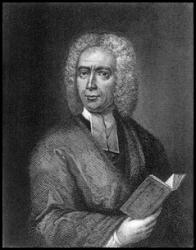
John Logan (1748-1788) was a Scottish Presbyterian minister, poet, dramatist, and hymn writer. He was born in 1748 at Fala, Midlothian, the son of a farmer. He received his education at the University of Edinburgh before entering the ministry of the Church of Scotland. In 1770, he became minister of South Leith, where he served for approximately twelve years. Alongside his pastoral responsibilities, Logan developed an interest in literature, philosophy, and history. During his ministry at Leith, he delivered a series of lectures on philosophy and history that attracted considerable attention. When the chair of Universal History at the University of Edinburgh became vacant, he sought the appointment but was unsuccessful.
Logan also pursued a career as a poet and dramatist. One of his dramatic works was Runnamede, a tragedy that he submitted to the manager of Covent Garden Theatre. The Lord Chamberlain prohibited its performance because of suspected seditious tendencies. The play was subsequently performed in Edinburgh. His literary interests also brought him into the religious publishing work of the Church of Scotland. In 1775, he became a member of the committee appointed to prepare the church's Translations and Paraphrases of Holy Scripture. This collection contained poetic renderings of biblical passages intended for use in public worship. Logan's involvement in its preparation became particularly significant because several paraphrases were later associated with a controversy over their authorship.
In 1782, Logan was compelled to resign his ministerial charge at South Leith to avoid deposition. He subsequently moved to London, where he supported himself partly through his literary work. He died there on December 28, 1788, aged forty. Although his life was relatively short, his writings included poetry, dramatic works, and religious compositions that became part of the history of Scottish hymnody.
Logan's name is especially associated with the authorship controversy surrounding the hymns and paraphrases attributed to him and Michael Bruce (1746-1767). Bruce had written poems and biblical paraphrases for a singing class at Kinnesswood during his lifetime. According to the account recorded by John Julian, Bruce copied these compositions into a manuscript book, hoping eventually to publish them. After Bruce's death in 1767, Logan requested the manuscript from Bruce's father, explaining that he wished to publish its contents for the benefit of the family. The manuscript was lent to him, but when Poems on Several Occasions, attributed to Michael Bruce, appeared in 1770, some familiar poems and hymns were missing. Bruce's father and members of the Kinnesswood singing class recognized that several compositions they knew to be Bruce's had not been included. Their subsequent requests for the return of the manuscript were unsuccessful. Logan reportedly explained that he feared the servants had used it to singe fowls, although only a few manuscript fragments were returned.
The controversy became more prominent in 1781, when Logan published Poems. By the Rev. Mr. Logan, One of the Ministers of Leith. This collection included the "Ode to the Cuckoo," "Lochleven," and other poems that had previously appeared in the 1770 volume attributed to Bruce. Logan also included several hymns and biblical paraphrases, many of which were of considerable poetic merit. Questions consequently arose over whether these compositions had originally been written by Bruce and subsequently claimed by Logan. John Julian, in his Dictionary of Hymnology, discussed the evidence presented by Dr. Mackelvie in his biography of Bruce and Dr. Grosart in his edition of Bruce's works. Julian considered the evidence for Bruce's authorship of the "Ode to the Cuckoo," "Lochleven," and other poems particularly convincing.
Nevertheless, Julian attributed several hymns and paraphrases to Logan, pending clearer evidence establishing Bruce's authorship. Among those he assigned to Logan were "Who Can Resist Th'Almighty Arm," "In Streets and Op'nings of the Gates," "Thus Speaks the Heathen: How Shall Man," "Take Comfort, Christians, When Your Friends," and "The Hour of My Departure's Come." He also recognized "Let Christian Faith and Hope Dispel," "Thus Speaks the High and Lofty One," and "What Though No Flowers the Fig-Tree Clothe" as compositions associated with Logan in the 1781 Translations and Paraphrases. Some of these were revisions of earlier biblical paraphrases, while others incorporated material from previous writers. Julian also acknowledged Logan's revisions and additional stanza to Doddridge's hymn "O God of Bethel, by Whose Hand." He observed that several hymns attributed to Bruce had gained wider use outside the Scottish Translations and Paraphrases, while comparatively few of those assigned to Logan had achieved similar circulation. This assessment reflected Julian's judgment of their respective poetic contributions, rather than resolving every question of authorship.
John Logan remains an important figure in the history of Scottish religious poetry because of his participation in the preparation of the Church of Scotland's biblical paraphrases and the hymns historically associated with his name. His literary career also included poetry, lectures, and dramatic writing. His connection with Michael Bruce's compositions continues to require careful treatment in hymnological records, since the authorship of several works has been debated for generations. When identifying Logan's hymns, it is therefore important to distinguish those assigned to him by hymnological authorities from those whose original authorship remains disputed.
The key distinction is that the controversy does not mean that all hymns attributed to John Logan were stolen from Michael Bruce. There are different levels of evidence for the poems, hymns, and biblical paraphrases involved.
What is known about the controversy
1. The missing manuscript: Michael Bruce died in 1767, leaving a manuscript containing poems and hymns. According to John Julian's account, Logan borrowed it from Bruce's father, supposedly intending to publish its contents for the benefit of the family. When the 1770 collection appeared, several familiar compositions were missing. Bruce's father subsequently sought the manuscript's return, but it was not recovered. Logan reportedly explained that the servants might have used it to singe fowls. This account raises serious questions, but the missing manuscript alone does not establish the authorship of every disputed composition.
2. The poems with strong evidence for Bruce: Logan's 1781 collection included the "Ode to the Cuckoo," "Lochleven," and other poems that had already appeared in the 1770 collection under Bruce's name. Julian considered Dr. Mackelvie's and Dr. Grosart's evidence convincing that these poems originated in Bruce's manuscript. These particular poems should therefore be associated with Bruce rather than Logan.
3. The disputed hymns and biblical paraphrases: The evidence is less straightforward for the religious compositions. Bruce had written hymns for the singing class at Kinnesswood, and some were reportedly familiar to his family and neighbours. Several compositions appearing in the Church of Scotland's Translations and Paraphrases were consequently claimed for Bruce. However, Julian did not accept that all of them belonged to Bruce. He assigned a number to Logan, while acknowledging that further evidence could change the conclusions.
How John Julian classified the hymns
The following distinctions are particularly important:
|
Hymn or paraphrase |
Julian's assessment |
|---|---|
|
"Who Can Resist Th'Almighty Arm" |
Attributed to Logan, pending stronger evidence for Bruce |
|
"In Streets and Op'nings of the Gates" |
Attributed to Logan, pending stronger evidence for Bruce |
|
"Thus Speaks the Heathen: How Shall Man" |
Attributed to Logan, pending stronger evidence for Bruce |
|
"Take Comfort, Christians, When Your Friends" |
Attributed to Logan, although the wider authorship question remained open |
|
"The Hour of My Departure's Come" |
Assigned to Logan by Julian, but Dr. Grosart claimed it for Bruce |
|
"Let Christian Faith and Hope Dispel" |
Claimed for Logan by W. Cameron and not seriously disputed by Bruce's supporters |
|
"Thus Speaks the High and Lofty One" |
Claimed for Logan by W. Cameron and not seriously disputed by Bruce's supporters |
|
"What Though No Flowers the Fig-Tree Clothe" |
Claimed for Logan by W. Cameron and not seriously disputed by Bruce's supporters |
|
"O God of Bethel, by Whose Hand" |
Originally by Philip Doddridge, with revisions and an additional stanza attributed to Logan |
|
"Behold the Mountain of the Lord" |
Associated with Michael Bruce, with Logan identified as adapter in Hymnary |
These distinctions follow Julian's discussion and the corresponding Hymnary records.
Dictionary of Hymnology
Behold my Servant! see Him rise Hymn
Scottish paraphrase of Isaiah xlii. 1–13 (1745), rewritten in Logan’s Poems (1781) and patched again for the 1781 Translations and Paraphrases; Julian ascribes the rewrite largely to M. Bruce.
ReadFew are thy days and full of woe Hymn
Michael Bruce paraphrase of Job xiv., about 1764; published by John Logan as his own in Poems (1781); Scottish Translations and Paraphrases (1781) use a mixed Bruce–Logan text. Also notes Newton’s “Fierce passions discompose the mind.”
ReadHow few receive with cordial faith Hymn
W. Robertson’s Isaiah liii paraphrase in the Scottish Translations and Paraphrases (1745; revised 1781 with Logan); many centos and a Leeson recast remain in use.
ReadHymns by John Logan
Includes hymns they wrote and hymns where they are credited as co-author, translator, paraphraser, adapter, or arranger.
| # | Title | Year | Views | |
|---|---|---|---|---|
| 1 | Go Forth, Ye Heralds | circa. 1780s | 38 | View |
Recently added hymns
Suggestions or corrections: contact us.
Leave it in the forum for others to answer — hymn requests, lyrics help, writers, worship planning, and more.