

12 Ways to Deepen Your Relationship with God
1 day, 4 hours ago
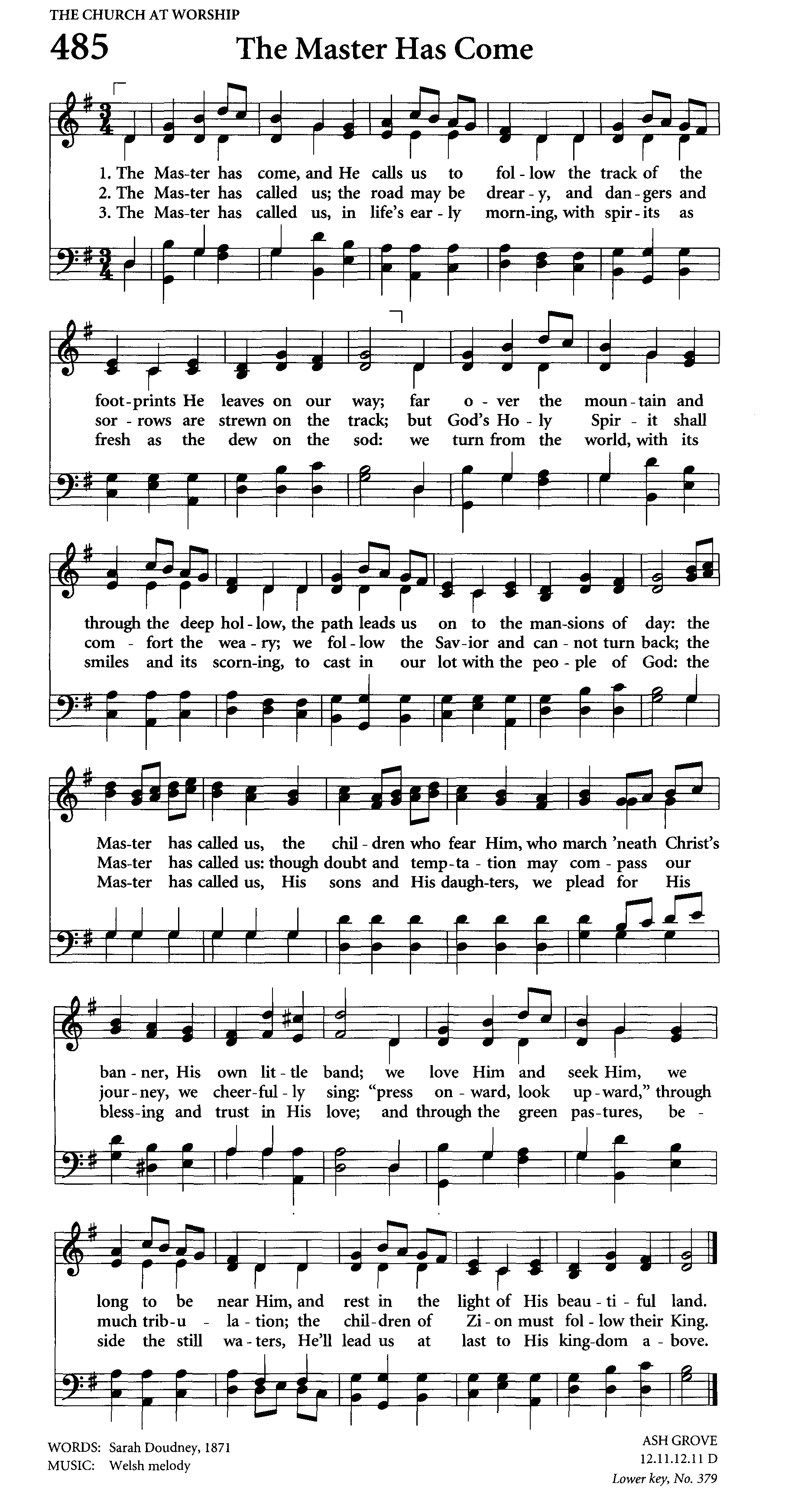
The Master Has Come
By Sarah Doudney (1871)
Mark it for others looking for a hymn like this.
New
Lyrics
1. The Master has come, and He calls us to follow
the track of the footprints He leaves on our way;
far over the mountain and through the deep hollow,
the path leads us on to the mansions of day:
the Master has called us, the children who fear Him,
who march 'neath Christ's banner, His own little band;
we love Him and seek Him, we long to be near Him,
and rest in the light of His beautiful land.
2. The Master has called us; the road may be dreary,
and dangers and sorrows are strewn on the track;
but God's Holy Spirit shall comfort the weary;
we follow the Savior and cannot turn back;
The Master has called us: though doubt and temptation
may compass our journey, we cheerfully sing:
"press onward, look upward," thru much tribulation;
the children of Zion must follow their King.
3. The Master has called us, in life's early morning,
with spirits as fresh as the dew on the sod:
we turn from the world, with its smiles and its scorning,
to cast in our lot with the people of God:
the Master has called us, His sons and His daughters,
We plead for His blessing and trust in His love;
and thru the green pastures, beside the still waters,
He'll lead us at last to His kingdom above.
Bible Reference
Matthew 9:35-38; Mark 1:14-15; Luke 4:18-21; John 1:14
Lectionary & readings
Open today’s (or any date’s) assigned scriptures and find related hymns across church calendars. Useful when planning worship around this song’s themes or its Bible reference.
Hymn scripture: Matthew 9:35-38; Mark 1:14-15; Luke 4:18-21; John 1:14
About This Hymn
“The Master Has Come” is a bright and reverent hymn that proclaims the nearness, authority, and compassion of Christ. Written by Sarah Doudney in the nineteenth century, the hymn reflects the evangelical emphasis of its era, calling worshipers to recognize that Christ is present, speaking, teaching, and inviting response. The repeated declaration that “the Master has come” serves both as an announcement of good news and as a summons to attentive faith.
The hymn draws heavily on Gospel imagery. Christ is portrayed as Teacher, Healer, and Lord, moving among His people with words of truth and deeds of mercy. This aligns closely with the biblical record of Jesus’ earthly ministry, where His coming marked the arrival of the kingdom of God. The text invites believers to listen to His voice, respond to His call, and follow Him in obedience and trust. The emphasis is not merely on Christ having come in history, but on His present reign and continuing work among His people.
Theologically, the hymn balances joy and reverence. It celebrates the grace of Christ’s coming while underscoring His authority as Master. The word “Master” itself reflects a biblical understanding of discipleship, reminding believers that following Christ involves submission, learning, and transformation. The hymn therefore functions as both praise and exhortation, encouraging a living, responsive faith.
Sarah Doudney’s writing is marked by clarity and warmth, making the hymn especially suitable for congregational singing, including gatherings with children and families. Its accessible language and strong refrain help reinforce its central message, allowing the truth of Christ’s coming to be easily remembered and joyfully proclaimed.
“The Master Has Come” continues to be valued for its Christ-centered focus and its call to spiritual attentiveness. It reminds the church that Jesus Christ is not distant or silent, but present and active, calling His people to hear His word, rejoice in His grace, and follow Him faithfully in every generation.
From the Dictionary of Hymnology
Related terms and concepts automatically matched to this hymn.
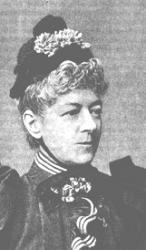
Doudney, Sarah Biography
Hampshire poet and story-writer; sacred pieces in Psalms of Life (1871) and Songs of Gladness. “The Master hath come” and “Saviour, now the day is ending” are among her best-known hymns.
Read moreNow that our holy day is done Hymn
Sarah Doudney’s Sunday-evening hymn from Psalms of Life, 1871, p. 106; taken into Horder’s Worship Song, 1905, and other collections.
Read moreSleep on, beloved, sleep and take thy rest Hymn
Death Anticipated; by Sarah Doudney in her Psalms of Life (1871), p. 76, in 7 stanzas of 3 lines with refrain "Good night," entitled "The Christian's Good night."
Read moreStaff Visualizer
Open in MIDI StudioPowered by HTML MIDI PLAYER, MIDI FILE Made by Hymnal Library. · Study chords & lyrics in MIDI Studio
Want weekly hymns and devotionals?
This hymn also appears in these hymnals
Click a spine to pull out the hymnal, then open it.
Hymns with the same subject
More hymns about Church, Holy Spirit, Jesus Christ
- I Surrender All - Judson W. Van DeVenter
- Search me, O God - J. Edwin Orr
- Come Unto Me ( Hear the blessed Savior) - Charles Price Jones
- The Church’s One Foundation - S. J. Stone
- Eternal Father, Strong To Save - William Whiting
- Holy God, We Praise Your Name - Clarence A. Walworth
- Of the Father's Love Begotten - J. M. Neale
- Did You Think to Pray? - M. A. Kidder
More hymn subjects
Recently Added Hymns
-
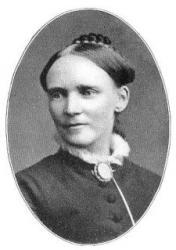 I Could Not Do Without Thee, O Savior of the LostFrances R. Havergal 1873
-
 I Bow My Forehead to the DustJohn Greenleaf Whittier 1865
-
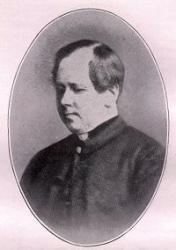 I Am Not Worthy, Holy LordH. W. Baker 1875
-
 With a Star So Bright / Out of the East - Medleyunknown circa. 1920s
-
 The Lord Is Merciful (Jesus Died for Me)William Hiley Bathurst 1831
Latest Updated Hymnals
-
Open
 Book of Common Praise (BoCP1915)Updated 1 day, 23 hours ago · 1915
-
Open
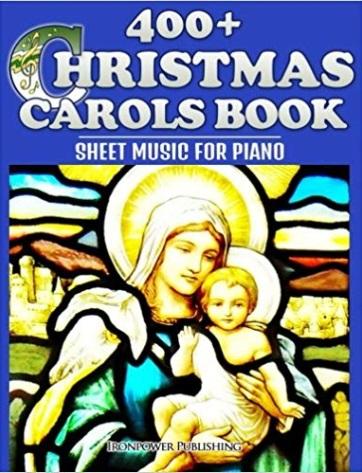 400+ Christmas Carols Book: Sheet Music for PianoUpdated 1 week ago · 2014
-
Open
 Psalms of GraceUpdated 1 week, 2 days ago · 2022
-
Open
 Spurgeon's Own Hymn BookUpdated 1 week, 2 days ago · 1866
-
Open
 The New Apostolic Church HymnalUpdated 4 weeks, 2 days ago · 2008
Hymn Information
Click a linked name to open their biography.
MIDI File
More Hymns by Sarah Doudney
Popular Hymns
Recent Blog Posts




Popular Blog Posts
-
 Lessons from the Book of Haggai: Putting God…5 months, 3 weeks ago
-
 Easter vs Passover: How a Biblical Feast Bec…7 months, 3 weeks ago
-
 The Full Story of the Birth of Jesus Christ:…11 months, 2 weeks ago
-
 The 30 Most Famous Christmas Hymns and Carols1 year, 2 months ago
-
 The Story Behind the Hymn “Amazing Grace”11 months, 1 week ago
Visit Us on Social Media
Latest from X (Twitter)
Tweets by HymnalLibraryLatest from Facebook
Latest on YouTube
Loading latest video...
Daily Bible Verse
Disclaimer
The hymns, sheet music, MIDI files, and related content on this website are provided for educational and research purposes only.
- Public Domain: Many of the hymns featured here are in the public domain and may be freely used.
- Copyrighted Works: Some hymns may still be under copyright protection. Where applicable, permission has either been requested from the copyright owner, or the content is shared under the principles of fair use for educational purposes.
⚠️ Important Notice: If you wish to reproduce, distribute, or use any copyrighted hymn beyond personal study or educational use, you must obtain permission directly from the copyright holder. This website does not grant any rights for commercial use yet.
If there is any other question please address it to us in our Contact Page, for further assistance. Thank you for using the site. May God Bless You.
Recently Added · Dictionary of Hymnology
Browse dictionary →
Can’t find a hymn or lyric?
Leave your question in the forum for others to answer — requests, missing lines, writers, and worship ideas welcome.