


What Is the Difference Between Psalms, Hymns…
9 hours ago
I Saw One Hanging on a Tree
By John Newton (1779)
Lyrics
1. I saw One hanging on a tree,
In agony and blood;
He fixed His loving eyes on me,
As near His cross I stood.
In agony and blood;
He fixed His loving eyes on me,
As near His cross I stood.
Refrain:
O, can it be, upon a tree
The Savior died for me?
My soul is thrilled, my heart is filled,
To think He died for me!
O, can it be, upon a tree
The Savior died for me?
My soul is thrilled, my heart is filled,
To think He died for me!
2. Sure, never to my latest breath,
Can I forget that look;
It seemed to charge me with His death,
Though not a word He spoke.
Can I forget that look;
It seemed to charge me with His death,
Though not a word He spoke.
3. My conscience felt and owned the guilt,
And plunged me in despair:
I saw my sins His blood had spilt
And helped to nail Him there.
And plunged me in despair:
I saw my sins His blood had spilt
And helped to nail Him there.
4. A second look He gave, which said,
“I freely all forgive:
This blood is for your ransom paid,
I die that you may live.”
“I freely all forgive:
This blood is for your ransom paid,
I die that you may live.”
Bible Reference
Zechariah 12:10
Lectionary & readings
Open today’s (or any date’s) assigned scriptures and find related hymns across church calendars. Useful when planning worship around this song’s themes or its Bible reference.
Hymn scripture: Zechariah 12:10
About This Hymn
"I Saw One Hanging on a Tree" is one of the deeply reflective hymns penned by John Newton, the former slave trader turned Anglican clergyman and hymn writer. Best known for “Amazing Grace,” Newton wrote this hymn as part of the Olney Hymns collection, a collaboration with poet William Cowper. This particular hymn captures Newton’s heart of repentance and awe at the crucified Savior, reflecting a powerful personal experience of conversion and grace.
The hymn is a meditation on the crucifixion of Christ, seen not merely as a historical event but as a deeply personal sacrifice. The opening line, “I saw One hanging on a tree,” immediately places the reader at the foot of the cross, witnessing the sufferings of Jesus with vivid and intimate language. Newton paints a graphic scene of the Savior's agony, yet the focus remains on the love and mercy flowing from that act of redemption.
As the verses progress, the author recounts the inner struggle and realization that Christ suffered for his sins. The turning point comes in the fourth stanza, where he declares that Jesus "looked on me as he died." This personal connection with Christ’s sacrifice moves the narrative from observation to conviction. Newton’s deep sense of guilt is met with a deeper awareness of divine love, and the hymn transitions from sorrow to salvation.
This hymn is not only rich in doctrine but also emotional and experiential, which makes it enduring in devotional and liturgical settings. The lyrics encapsulate central themes of the gospel: the atonement, personal guilt, grace, faith, and spiritual transformation. The fifth and final verse provides a response: a declaration of loyalty and love to the Savior who gave His life. “While His free grace I sing, I’ll sing this song anew,” reflects Newton’s understanding that the Christian life is one of continual gratitude and worship.
In terms of musical settings, this hymn has been arranged with various tunes over the years, but the emotional depth of the text has always remained the core of its appeal. Though not as widely known as “Amazing Grace,” this hymn is treasured by those who appreciate Newton’s theology of grace and his poetic insight into the human soul’s need for redemption.
"I Saw One Hanging on a Tree" continues to stir hearts with its Christ-centered message and is especially meaningful during Holy Week or in personal reflection on the cross. Newton’s words remind believers of the cost of sin and the immeasurable mercy of the Savior who bore it all.
From the Dictionary of Hymnology
Related terms and concepts automatically matched to this hymn.
God moves in a mysterious way Hymn
Cowper’s “Light shining out of Darkness,” published 1774 in Omicron’s Letters and widely known thereafter. Popular suicide-origin stories do not match the memoir chronology Julian reviews.
Read moreHow sweet the name of Jesus sounds Hymn
John Newton’s Olney Hymns (1779) classic on the Name of Jesus; widely used, often omitting stanza iv.; many substitutes for “Husband” in stanza v.; Latin versions by Bingham and Macgill.
Read moreFew are thy days and full of woe Hymn
Michael Bruce paraphrase of Job xiv., about 1764; published by John Logan as his own in Poems (1781); Scottish Translations and Paraphrases (1781) use a mixed Bruce–Logan text. Also notes Newton’s “Fierce passions discompose the mind.”
Read moreStaff Visualizer
Open in MIDI StudioPowered by HTML MIDI PLAYER, MIDI FILE Made by Hymnal Library. · Study chords & lyrics in MIDI Studio

Want weekly hymns and devotionals?
⭐ Recommend This Hymn
Share this beautiful hymn with others
This hymn also appears in these hymnals
Click a spine to pull out the hymnal, then open it.
You might also like
Hymns with the same subject
More hymns about Jesus Christ, Redemption
- Because He Lives - Bill & Gloria Gaither
- What A Day That Will Be - Jim Hill
- How Deep the Father's Love for Us - Stuart Townend
- Blessed Assurance - Fanny Crosby
- Victory in Jesus - (I Heard an Old, Old Story) - E. M. Bartlett
- In Christ alone (my hope is found) - Stuart Townend
- Look and Live - William A. Ogden
- Beulah Land - Edgar Page
More hymn subjects
Explore other themes across the library.
Hymns about Adoration
Hymns about Pentecost
Hymns about Children
Hymns about Refuge
Hymns about Scripture
Hymns about Heaven
Hymns about Repentance
Hymns about Conversion
Browse all subjects →
Latest Updated Hymnals
-
Open
 Book of Common Praise (BoCP1915)Updated 8 hours ago · 1915
-
Open
 The New Apostolic Church HymnalUpdated 1 week, 5 days ago · 2008
-
Open
 400+ Christmas Carols Book: Sheet Music for PianoUpdated 1 week, 6 days ago · 2014
-
Open
 The Temple HymnalUpdated 1 week, 6 days ago · 1918
-
Open
 The Popular HymnalUpdated 1 week, 6 days ago · 1918
Hymn Information
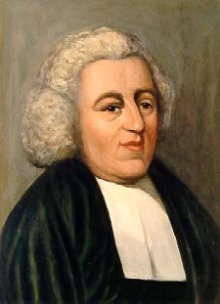
Click a linked name to open their biography.
MIDI File
Popular Hymns
Recent Blog Posts



Popular Blog Posts
-
 Lessons from the Book of Haggai: Putting God…5 months, 1 week ago
-
 Easter vs Passover: How a Biblical Feast Bec…7 months ago
-
 The Full Story of the Birth of Jesus Christ:…10 months, 4 weeks ago
-
 The 30 Most Famous Christmas Hymns and Carols1 year, 2 months ago
-
 The Story Behind the Hymn “Amazing Grace”10 months, 3 weeks ago
Visit Us on Social Media
Latest from X (Twitter)
Tweets by HymnalLibraryLatest from Facebook
Latest on YouTube
Loading latest video...
Daily Bible Verse
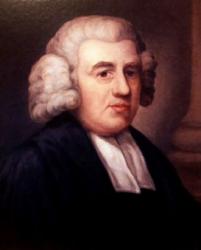 John Newton (1725–1807) was an English Anglican cleric, hymn writer, and prominent figure in the evangelical movement whose life story of conversion and service has inspired Christians for centuries. He was born in Wapping, London, England, on July 24, 1725, into a Christian home, but his mother died when he was young, and he went to sea with his father at age eleven. As a youth and young man he lived a reckless life at sea, was pressed into service in the Royal Navy, and later worked aboard slave ships in the trans-Atlantic slave trade, even becoming a ship’s captain for years. A severe storm at sea in 1748 led him to cry out to God and marked the beginning of his spiritual turning toward Christ, a change that grew more fully over subsequent years.
Disclaimer
The hymns, sheet music, MIDI files, and related content on this website are provided for educational and research purposes only.
- Public Domain: Many of the hymns featured here are in the public domain and may be freely used.
- Copyrighted Works: Some hymns may still be under copyright protection. Where applicable, permission has either been requested from the copyright owner, or the content is shared under the principles of fair use for educational purposes.
⚠️ Important Notice: If you wish to reproduce, distribute, or use any copyrighted hymn beyond personal study or educational use, you must obtain permission directly from the copyright holder. This website does not grant any rights for commercial use yet.
If there is any other question please address it to us in our Contact Page, for further assistance. Thank you for using the site. May God Bless You.
Recently Added · Dictionary of Hymnology
Browse dictionary →
Can’t find a hymn or lyric?
Leave your question in the forum for others to answer — requests, missing lines, writers, and worship ideas welcome.