




13 Traditional Hymns for Easter Sunday
Mar 12, 2026
How Tedious and Tasteless the Hours
By John Newton
Lyrics
1. How tedious and tasteless the hours
When Jesus no longer I see!
Sweet prospects, sweet birds, and sweet flowers,
Have all lost their sweetness to me;
The midsummer sun shines but dim,
The fields strive in vain to look gay;
But when I am happy in Him,
December's as pleasant as May.
When Jesus no longer I see!
Sweet prospects, sweet birds, and sweet flowers,
Have all lost their sweetness to me;
The midsummer sun shines but dim,
The fields strive in vain to look gay;
But when I am happy in Him,
December's as pleasant as May.
2. His name yields the richest perfume,
And sweeter than music His voice;
His presence disperses my gloom,
And makes all within me rejoice;
I should, were He always thus nigh,
Have nothing to wish or to fear;
No mortal so happy as I,
My summer would last all the year.
And sweeter than music His voice;
His presence disperses my gloom,
And makes all within me rejoice;
I should, were He always thus nigh,
Have nothing to wish or to fear;
No mortal so happy as I,
My summer would last all the year.
3. Content with beholding His face,
My all to His pleasure resigned,
No changes of seasons or place
Would make any change in my mind:
While blest with a sense of His love,
A palace a toy would appear;
And prisons would palaces prove,
If Jesus would dwell with me there.
My all to His pleasure resigned,
No changes of seasons or place
Would make any change in my mind:
While blest with a sense of His love,
A palace a toy would appear;
And prisons would palaces prove,
If Jesus would dwell with me there.
4. Dear Lord, if indeed I am Thine,
If Thou art my sun and my song,
Say, why do I languish and pine,
And why are my winters so long?
O drive these dark clouds from my sky,
Thy soul-cheering presence restore;
Or take me to Thee upon high,
Where winter and clouds are no more.
If Thou art my sun and my song,
Say, why do I languish and pine,
And why are my winters so long?
O drive these dark clouds from my sky,
Thy soul-cheering presence restore;
Or take me to Thee upon high,
Where winter and clouds are no more.
Bible Reference
2 Corinthians 12:9
About This Hymn
“All Sufficiency of Jesus” reflects the deep spiritual insight of John Newton, written around 1779 during the same fertile period that produced many of his well known hymns. Newton, once a slave trader transformed by the grace of God, carried throughout his ministry a strong conviction that Christ was not only the source of salvation but also the constant supply for every need of the believer. This hymn captures that conviction with clarity and devotion, lifting the heart to the all sufficient Savior who strengthens, sustains, and completes His people.
The message of the hymn is rooted in 2 Corinthians 12:9, where the Lord says, “My grace is sufficient for thee, for my strength is made perfect in weakness.” Newton uses this truth to remind believers that every spiritual lack finds its answer in Christ. Human weakness does not hinder the work of God. Instead, it becomes the place where His power is most clearly seen. Newton shows the tender ministry of Christ, who comforts the weary, guides the doubtful, and supplies strength in every trial.
Throughout the hymn, Newton emphasizes the fullness of Jesus. No burden is too heavy, no sin too strong, no sorrow too deep for the Savior to address. Christ is presented as the complete and perfect source of help, offering grace that is abundant, mercy that is unfailing, and wisdom that never falters. Newton encourages the believer to draw near to Christ with confidence, trusting that He provides everything needed for life and godliness.
The hymn continues to hold devotional value because it speaks directly to the struggles of the Christian journey. It assures the believer that Christ does not offer partial help or distant aid. He offers Himself in fullness. Newton’s words invite worshippers to rest in this sufficiency, to cast their cares upon the Lord, and to walk forward in faith knowing that the Savior is more than enough for every moment.

📬 Subscribe to Our Devotional Updates
Receive weekly hymns, devotionals, and website features directly in your inbox.
✅ Thank you! You'll start receiving our updates soon.
⭐ Recommend This Hymn
Share this beautiful hymn with others
Latest Updated Hymnals
Hymn Information
- Category: Hymn
- Author/Writer: John Newton (1779)
- Added: November 24, 2025
- Last Updated: November 24, 2025
- Views: 551
To view the author's biography, click their name above.
MIDI File
Ready to load
Download MIDI
Popular Hymns
Recent Blog Posts



Popular Blog Posts




Visit Us on Social Media
Latest from X (Twitter)
Tweets by HymnalLibraryLatest from Facebook
Latest on YouTube
Loading latest video...
Daily Bible Verse
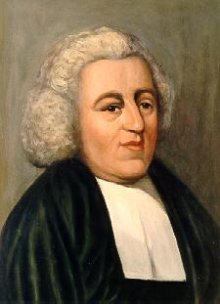
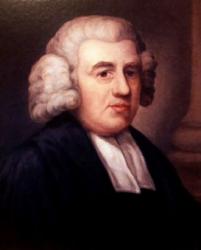 John Newton (1725–1807) was an English Anglican cleric, hymn writer, and prominent figure in the evangelical movement whose life story of conversion and service has inspired Christians for centuries. He was born in Wapping, London, England, on July 24, 1725, into a Christian home, but his mother died when he was young, and he went to sea with his father at age eleven. As a youth and young man he lived a reckless life at sea, was pressed into service in the Royal Navy, and later worked aboard slave ships in the trans-Atlantic slave trade, even becoming a ship’s captain for years. A severe storm at sea in 1748 led him to cry out to God and marked the beginning of his spiritual turning toward Christ, a change that grew more fully over subsequent years.
Disclaimer
The hymns, sheet music, MIDI files, and related content on this website are provided for educational and research purposes only.
- Public Domain: Many of the hymns featured here are in the public domain and may be freely used.
- Copyrighted Works: Some hymns may still be under copyright protection. Where applicable, permission has either been requested from the copyright owner, or the content is shared under the principles of fair use for educational purposes.
⚠️ Important Notice: If you wish to reproduce, distribute, or use any copyrighted hymn beyond personal study or educational use, you must obtain permission directly from the copyright holder. This website does not grant any rights for commercial use yet.
If there is any other question please address it to us in our Contact Page, for further assistance. Thank you for using the site. May God Bless You.