
The hymn "O heavenly love, arise, arise" has a distinct literary origin that sets it apart from traditional liturgical compositions. The text is extracted from a dramatic song attributed to the medieval character Wolfram von Eschenbach, who is depicted singing it during a prize contest before a German princess. The performance occurs within the narrative framework of Tannhäuser; or, The Battle of the Bards, a collaborative poem published in London by Chapman and Hall in 1861. The original work was issued under the pseudonyms Neville Temple and Edward Trevor. These names masked the identities of the true authors: the Honorable Julian Charles Henry Fane and Edward Robert Bulwer, who later succeeded to the title of Lord Lytton. In its initial secular publication, the specific song spanned five stanzas of four lines each.
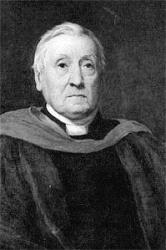
The transition from a secular dramatic poem to an ecclesiastical hymn took place through the editorial work of Dr. Benjamin Hall Kennedy. In his 1863 collection, Hymnologia Christiana, Kennedy extracted the third, fourth, and fifth stanzas of the original poem to form a new piece, designated as Hymn 195. To bring the composition to a spiritually fitting conclusion, Kennedy appended a final closing stanza of his own authorship. The resulting compilation is regarded as an exceptionally beautiful hymn, characterized by its focus on love as a guide, making it highly appropriate for use during the liturgical season of Epiphany.
Related Hymns
Hymns in the library connected to this dictionary topic.
Related Hymn Sheets
3 shown at a time — use the arrows to browse all 1 sheet.
Related Authors
Writers connected to this dictionary topic.
Keywords
Related terms for this dictionary entry.
Recent Dictionary Entries
Newly added terms from the Dictionary of Hymnology.
If you notice any mistake or have suggestions, please contact us on our contact page.