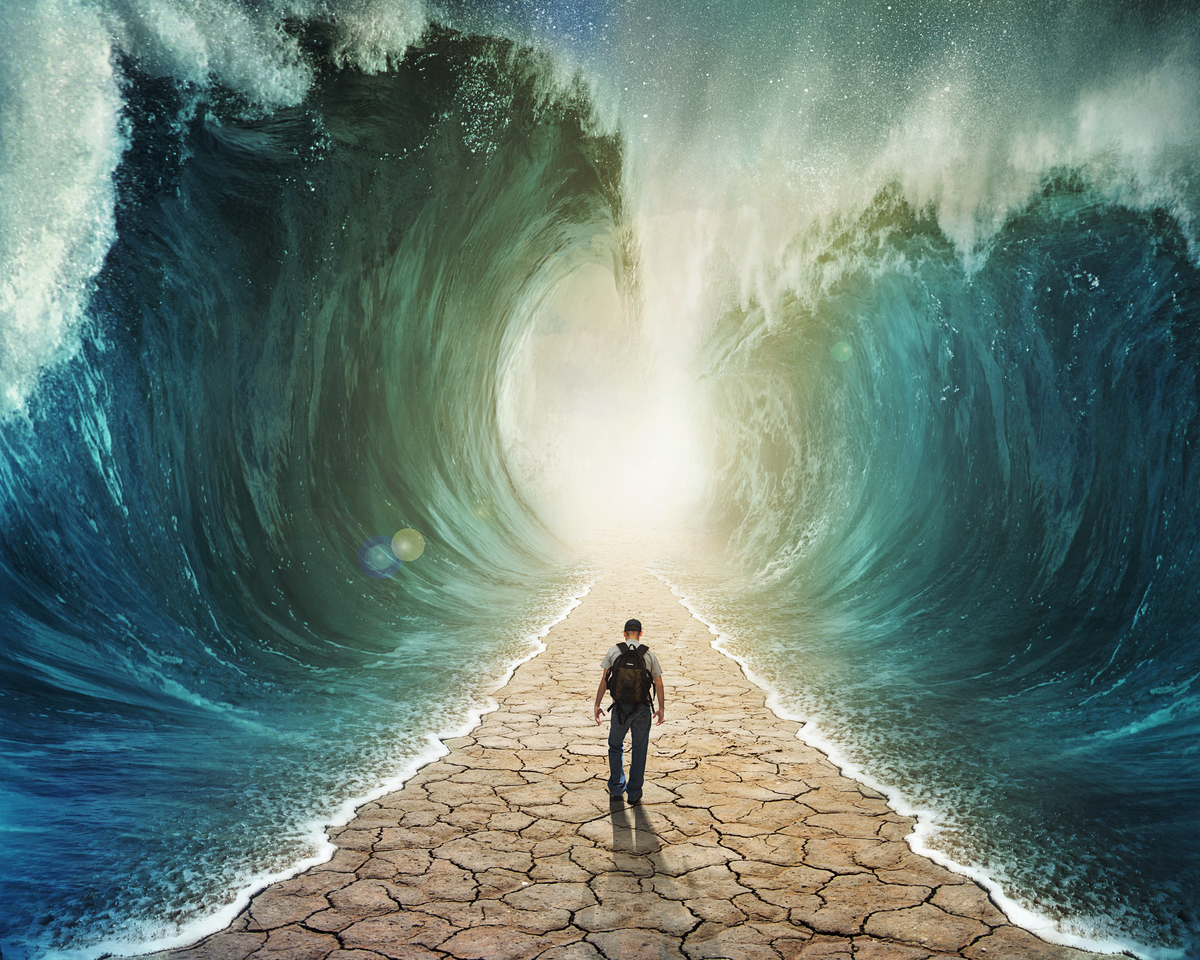
Why Do Skeptics Say Miracles Are Impossible?
Many skeptics today confidently claim that miracles are impossible, not merely unlikely or rare, but ruled out from the start. This attitude is not new. It stretches back through centuries of philosophical doubt, scientific naturalism, and skeptical reinterpretation of history. To understand why so many reject the possibility of miracles, we must look at the assumptions they begin with, the way historians evaluate evidence, and the worldview that shapes how reality is interpreted. Very often, skepticism about miracles is not driven by a lack of evidence, but by a prior commitment to a belief system that refuses to allow miracles in the first place.
One of the primary reasons skeptics reject miracles is because they begin with the assumption that nature is a closed system. In other words, the universe is believed to operate entirely on physical laws without any outside influence. Under this worldview, anything supernatural is ruled out before the evidence is even examined. This approach does not ask whether miracles have happened. Instead, it declares in advance that miracles cannot happen. This is not a conclusion based on science, but a philosophical commitment to naturalism. The problem is that such reasoning is circular. The skeptic says, “Miracles are impossible because the universe is purely natural,” and then says, “We know the universe is purely natural because miracles never occur.” The conclusion is assumed in the premise. This means the issue is not whether miracles are supported by evidence, but whether a person is willing to accept a worldview in which God can act in His own creation.
Skeptics also argue from probability. They claim miracles are so rare that they are the least likely explanation for any event, so they must always be dismissed in favor of a natural explanation, even when the natural explanation is weak or speculative. But this assumes that frequency determines truth. Something does not become impossible simply because it is rare. The resurrection of Jesus, for example, is not dismissed because the evidence is weak, but because it is a miracle, and therefore rejected on principle by many. Yet the historical accounts surrounding the resurrection are early, eyewitness-based, and multiply attested, which is far stronger than many widely accepted events in ancient history. The real issue is not the evidence itself, but the prejudice against the supernatural.
Another factor influencing skepticism is the way historians evaluate ancient documents. Some critics argue that historical writing from the biblical period is unreliable because it contains accounts of miracles. But this again assumes that miracles cannot occur, so any document reporting them must automatically be untrustworthy. Ironically, the same standard is not applied consistently to other ancient writings. For example, we possess far fewer historical documents about figures like Alexander the Great, and many of the biographies written about him were composed centuries after his lifetime. Despite this, historians accept core events about his life because the historical method allows for reasonable confidence based on surviving evidence.
By contrast, the accounts of the life, death, and resurrection of Jesus were written within the lifetime of eyewitnesses, and early Christian communities preserved these writings carefully because the events were immediate, public, and deeply consequential. The resurrection was proclaimed openly in the same city where it occurred, while eyewitnesses and opponents were still alive. This makes the testimony historically weighty. Yet skeptics dismiss it, not because the documentation is weak, but because the conclusion involves a miracle, and miracles are excluded before investigation even begins.
Bias also plays a major role. Every historian brings assumptions to the table. Believers acknowledge a worldview where God exists and can act in history. Skeptics often adopt a worldview where only natural explanations are allowed, even when forced to stretch those explanations beyond credibility. Both sides interpret evidence through a lens, but only one side admits it. When skeptics claim to be “neutral” or “purely scientific,” they often overlook that their denial of miracles is rooted in belief, not observation. The debate, therefore, is less about data and more about worldview foundations.
Many skeptics also view miracles as impossible because they equate scientific law with absolute restriction, rather than recognizing that scientific laws describe how nature normally behaves under ordinary conditions. Miracles, however, are not violations of order, but acts of God who stands above the created order. A miracle is not chaos entering nature. It is the Creator exercising authority over what He made. Just as an artist can alter a painting without destroying it, God can act within His creation without contradicting Himself. Science describes what regularly happens. Miracles describe what God chooses to do in extraordinary moments.
Another reason skeptics resist miracles is because miracles point to moral and spiritual accountability. If God exists and intervenes in history, then life has meaning, truth is objective, and humans are answerable to a higher authority. Many people are not ultimately rejecting miracles because of intellectual difficulty, but because of spiritual resistance. Accepting the resurrection of Jesus, for instance, means acknowledging His Lordship, His divine identity, and His claim over our lives. Denying miracles allows a person to deny the implications of faith. In this sense, disbelief is not purely scientific or philosophical. It is deeply personal.
The Bible presents a very different understanding. Scripture reveals a God who is both transcendent and active, sustaining the universe and entering into human history. Miracles in Scripture are not random displays of power. They serve redemptive purposes. They reveal God’s character, authenticate His messengers, and point toward His saving work in Christ. The greatest miracle, the resurrection of Jesus, stands as the foundation of Christian hope, grounded not in legend or myth, but in historically rooted testimony that transformed the lives of witnesses and reshaped the course of history.
When skeptics say miracles are impossible, they are not making a scientific claim, but a philosophical declaration. They are not disproving miracles. They are dismissing them based on a worldview that already excludes God. But if God exists, if He created the universe, and if He is sovereign over life and death, then miracles are not only possible, they are entirely reasonable. The question is not whether nature allows miracles. The question is whether God is real and free to act within His creation.
Skepticism toward miracles is not the inevitable conclusion of rational thinking. It is the product of assumptions about reality, truth, and God. When those assumptions are challenged, the possibility of miracles reopens, and the testimony of Scripture stands with clarity and conviction. Miracles do not violate reason. Instead, they invite us to see a world where God is present, powerful, purposeful, and actively working in the story of humanity, calling us not merely to observe history, but to respond in faith to the One who rules over it.




No comments yet. Be the first to share your thoughts!