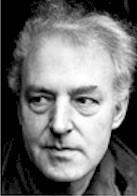
Sydney Carter
Biography
Sydney Bertram Carter (1915–2004) was an English poet, lyricist, folk musician, and radical hymn writer. A central figure in the mid-20th-century British folk music revival, Carter completely broke the mold of traditional hymnody by introducing provocative, rhythmic, and socially conscious "folk hymns." His compositions challenged rigid, static theology, most famously giving the global church "Lord of the Dance" a song that reimagined the ministry, death, and resurrection of Jesus Christ through the dynamic metaphor of dance.
Early Life, War, and Folk Roots
Sydney Carter was born on May 6, 1915, in Camden Town, London. He was educated at Christ's Hospital and went on to attend Balliol College, Oxford, where he graduated with a degree in history in 1936.
During World War II, Carter’s deeply held pacifist convictions led him to register as a conscientious objector. He joined the Friends' Ambulance Unit (a volunteer ambulance service run by the Quakers), serving with distinction in Egypt and Greece. His exposure to the devastating human realities of war, combined with the rich, raw folk music traditions of the Mediterranean, heavily reshaped his approach to faith, poetry, and storytelling.
Returning to post-war London, Carter worked as a schoolmaster and a writer for the British Council. He soon found his true home in the exploding British folk revival of the 1950s and 1960s, collaborating with foundational folk icons like Martin Carthy and the Watersons.
Redefining Church Music: The Metaphor of the Dance
Carter found standard church hymns often too stiff, academic, and detached from the struggles of the modern world. He believed that sacred music should be gritty, infectious, and conversational.
In 1963, Carter adapted a traditional American Shaker melody—the tune from "Simple Gifts"—and wrote a five-stanza lyric that would permanently alter modern hymnology: "I Danced in the Morning" (universally known as "Lord of the Dance").
Instead of viewing Christ through abstract theological titles, Carter painted a vivid, poetic picture of a joyful, active Savior whose cosmic dance began at creation, swept through the shores of Galilee, defied the Pharisees, survived the cross, and continues eternally through His followers.
The opening bars and rhythmic structure of Carter's global anthem, 'Lord of the Dance'. Source: Sheet Music Plus
Major Compositions and Social Justice
Carter’s pen was frequently driven by the social gospel movement, civil rights, and the anti-war movement. His hymns consistently asked uncomfortable questions about human empathy and institutional religious hypocrisy.
1. When I Needed a Neighbor (1965)
Written as a direct challenge to sterile, localized church piety, this piece acts as a modern musical midrash on Christ's parable of the Good Samaritan. It strips away theological jargon to ask hard, practical questions about global human brotherhood, cutting across lines of race, creed, and status:
"When I needed a neighbor, were you there, were you there? And the creed and the color and the name won't matter, were you there?"
2. One More Step Along the World I Go (1971)
An intensely popular "traveling" folk hymn that became a staple for youth services, school assemblies, and confirmation milestones across the English-speaking world. It frames the Christian life not as a static destination, but as an unfolding, unpredictable pilgrimage into the unknown.
3. Said Judas to Mary (1964)
A fascinating, deeply philosophical dialogue ballad regarding Mary of Bethany anointing Jesus' feet with expensive perfume. Carter uses the song to explore the tension between immediate human charity and profound, extravagant spiritual adoration.
Global Impact and Cross-Cultural Legacy
Because Carter's music was rooted in acoustic folk architecture rather than massive pipe-organ arrangements, it migrated easily across the globe. His lyrics were quickly translated into Spanish, French, and dozens of other languages, finding a home in standard denominational hymnals, progressive Catholic folk masses, and campfire gatherings alike.
| Selected Hymn First Line | Core Theme | Cultural Legacy |
|---|---|---|
| I danced in the morning when the world was begun | The Cosmic & Earthly Ministry of Christ | Appeared in over 50 major global hymnals; inspired the hit Irish dance production Lord of the Dance. |
| When I needed a neighbor, were you there? | Practical Christian Charity & Civil Rights | A cornerstone anthem for ecumenical, humanitarian, and social justice ministries. |
| One more step along the world I go | Faith as a Lifelong Journey | Widely used across the UK and North America as a graduation, processional, or stepping-stone liturgy. |
| Every star shall sing a carol | Epiphany / Creation | A unique Christmas piece framing the universe and space exploration as part of God's praise. |
Lord of the Dance — Chorus
Dance, then, wherever you may be, I am the Lord of the Dance, said He, And I'll lead you all, wherever you may be, And I'll lead you all in the Dance, said He.
Sydney Carter passed away on March 13, 2004, in London at the age of 88. Though he often described his own personal faith as a wrestling match filled with doubt and questioning, his songs continue to push congregations out of static pews and into a dynamic, active faith that dances to the rhythm of love and justice.
Hymns by Sydney Carter
Includes hymns they wrote and hymns where they are credited as co-author, translator, paraphraser, or adapter.
| # | Title | Year | Views | |
|---|---|---|---|---|
| 1 | Every Star Shall Sing a Carol | 1961 | 1260 | View |
Recently added hymns
Suggestions or corrections: contact us.
Leave it in the forum for others to answer — hymn requests, lyrics help, writers, worship planning, and more.