About S. C. Kirk
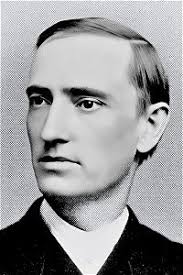
Salathiel Cleaver Kirk (1845–1913)—frequently published as S. C. Kirk—was a passionate American educator, public official, and Methodist exhorter whose lifelong dedication to public welfare and spiritual stewardship culminated in a vast body of Sunday School music and devotional poetry. While his local legacy in Pennsylvania was marked by his advocacy for clean government and accessible education, his enduring contribution to the global church is a timeless anthem of Christian commitment, "Our Best" (frequently known by its opening line, "Hear Ye the Master's Call").
Born in Perry County, Pennsylvania, Kirk's early life was a masterclass in perseverance. Losing his father around the age of fifteen, he worked as a school janitor to pay for his own tuition at a local normal school. He passed his examinations, began teaching, and eventually founded the West Schuylkill Normal School in Tremont, Pennsylvania, an institution specifically designed to give people of limited financial means a fighting chance at a proper education. A man of independent thought and deep integrity, Kirk spent eighteen years in education before serving as a Democratic State Representative and later as a county court clerk (prothonotary). He frequently used his political platforms to challenge institutional corruption and advocate for social equity.
Concurrently, Kirk's spiritual home was the Methodist Episcopal Church, where he served dynamically as a Sunday school superintendent, class leader, and president of the local YMCA. His sharp literary mind and deep spiritual convictions naturally found an outlet in hymnody. Over his lifetime, Kirk penned over ninety hymns, carols, and temperance songs, culminating in his collected volume of poetry and prose, Musings Along the Way.
The Masterpiece: "Our Best"
In 1912, Kirk penned his most famous text, "Our Best," which was set to a stirring, rhythmic melody by the legendary gospel composer and publisher Grant Colfax Tullar. Written in a stately 10.10.10.10 meter with an energetic refrain, the hymn strips away complex theological debate and replaces it with a direct, conversational challenge to the singer regarding individual stewardship and personal accountability.
Instead of demanding grand, impossible feats, Kirk’s text comfortingly reminds the believer that God does not evaluate our service based on the magnitude of our talents, but on the sincerity of our effort:
Hear ye the Master's call, “Give Me thy best!”
For, be it great or small, that is His test.
Do then the best you can, not for reward,
Not for the praise of men, but for the Lord.
Refrain:
Every work for Jesus will be blest,
But He asks from everyone his best.
Our talents may be few, these may be small,
But unto Him is due our best, our all.
The hymn struck a massive chord across denominations, quickly appearing in over seventy major hymnals throughout the twentieth century. It became a foundational anthem for youth choirs, missionary societies, and ordination services, encouraging generations of everyday workers to find holy dignity in their quiet, routine labors.
Kirk passed away on August 20, 1913, in Philadelphia at the age of sixty-eight and was laid to rest in the city's Northwood Cemetery. Though he spent his life managing classrooms, fighting for local political transparency, and keeping county court records, his voice remains vibrant in the global church through a simple, enduring song that continuously challenges believers to lay their finest efforts at the feet of the Master.
You can listen to a traditional instrumental arrangement with lyrics by visiting this lyric video for "Our Best", which highlights how S. C. Kirk's message of faithful service continues to inspire singing congregations today.