About Josiah Conder
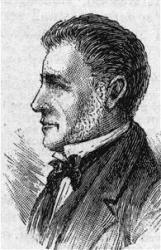
Josiah Conder was a towering figure in 19th-century British Nonconformity, distinguished as a prolific author, editor, and hymnologist. Born in London in 1789 into a family of booksellers and engravers, he possessed a keen literary mind and a deep ancestral connection to theological education. Throughout his career, he was widely known as the proprietor and editor of the Eclectic Review, a position that allowed him to interact with diverse theological and philosophical movements. His prose output was staggering, encompassing the thirty-volume descriptive series The Modern Traveller, a biography of John Bunyan, and various works on geography, history, and biblical translation.
In the realm of hymnology, Conder holds a place of unique importance as the architect of the first Congregational Hymn Book (1836). As an editor, he sought to supplement the traditional psalms of Isaac Watts with modern hymns, contributing fifty-six of his own compositions to the collection. His editorial influence was profound; it is noted that approximately eighty percent of the hymns in his 1836 collection remained in use for decades across Great Britain and America. He was a champion of "the poet of the sanctuary," Isaac Watts, yet he pushed the boundaries of Congregational worship by incorporating metrical versions of the collects from the Book of Common Prayer, demonstrating a rare catholicity and breadth of spirit for a Nonconformist of his era.
As a writer, Conder is ranked among the finest hymnists of the early 19th century. His work is characterized by an elevation of thought and a masterly unfolding of spiritual ideas, avoiding the repetitive mannerisms that often plagued his contemporaries. His hymns, such as "The Lord Is King, Lift Up Thy Voice" and "Bread of Heaven, on Thee I Feed," are celebrated for their theological depth and lyrical beauty. He had a particular gift for the "subdued and pathetic" style, evidenced in hymns like "Day by Day the Manna Fell," while also being capable of expressing vibrant, lyric feeling in works like "O Show Me Not My Saviour Dying," which emphasizes the reality of a living, risen Lord.
Conder’s legacy is preserved in the sheer volume of his work that remains in common use, surpassed in the Congregational tradition only by the foundational figures of Watts and Doddridge. His final collection, Hymns of Praise, Prayer, and Devout Meditation, was in the press at the time of his death in 1855 and was posthumously revised by his son. From his popular versions of the Psalms to his deeply personal meditations on the "boundless sea" of God's presence, Conder's hymns continue to serve as a bridge between high literary art and the enduring elements of evangelical faith.