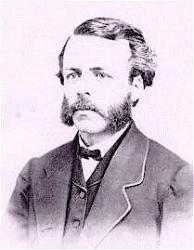
About Joseph H. Gilmore
Joseph Henry Gilmore was a distinguished American Baptist minister, educator, and author who is best remembered for writing one of the most beloved hymns in the English language. Born in Boston in 1834, Gilmore received an elite education at Brown University and Newton Theological Seminary. After his ordination in 1862, he briefly served in the ministry before transitioning into academia. He spent the majority of his professional life at the University of Rochester, where he was a professor of English, logic, and rhetoric for over forty years. His scholarly contributions were significant, and he published several textbooks on English and American literature that were widely used during his tenure.
The defining moment of Gilmore's hymnological legacy occurred in 1862 at the First Baptist Church in Philadelphia. During a mid-week prayer meeting held in the midst of the American Civil War, Gilmore gave a lecture on the Twenty-third Psalm. He was particularly struck by the phrase "He leadeth me," reflecting on how God's guidance is a constant reality regardless of the turbulent circumstances of life. Following the service, while staying at the home of a friend, he sat down and jotted the words to "He Leadeth Me, O Blessed Thought" on the back of his lecture notes. He handed the paper to his wife, who later sent it to the Christian Watchman and Reflector without his knowledge.
Gilmore was largely unaware of the impact of his poem until years later when he entered a church in Rochester and saw the words printed in a hymnal. The text gained immense popularity after it was set to a tune by the famous gospel composer William B. Bradbury, who also added the rhythmic chorus that became a signature of the hymn. The song’s message of divine companionship through "waters still" and "troubled sea" resonated deeply with a nation recovering from war and eventually became a staple of global Christianity. It has been translated into dozens of languages, including Swahili, Chinese, and Tagalog, maintaining a massive presence in modern worship collections.
Throughout his later years, Gilmore remained a humble servant of the university and his faith, often surprised by the enduring reach of his "blessed thought." He was known for his clear logic and deep literary appreciation, yet he recognized that his most lasting contribution was a simple expression of trust in God’s providence. When he died in Rochester in 1918, he left behind a legacy that combined academic rigour with a profound, accessible spirituality. Today, "He Leadeth Me" stands as a monumental example of 19th-century American hymnody, providing comfort to millions of believers facing various shadows and "scenes of deepest gloom."