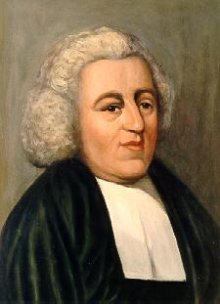
John Newton
Hymn writer & lyricist
About John Newton
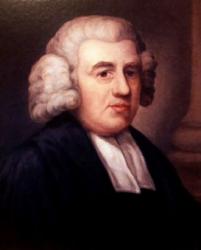 John Newton (1725–1807) was an English Anglican cleric, hymn writer, and prominent figure in the evangelical movement whose life story of conversion and service has inspired Christians for centuries. He was born in Wapping, London, England, on July 24, 1725, into a Christian home, but his mother died when he was young, and he went to sea with his father at age eleven. As a youth and young man he lived a reckless life at sea, was pressed into service in the Royal Navy, and later worked aboard slave ships in the trans-Atlantic slave trade, even becoming a ship’s captain for years. A severe storm at sea in 1748 led him to cry out to God and marked the beginning of his spiritual turning toward Christ, a change that grew more fully over subsequent years.
In 1754 Newton left the sea and began studying for the ministry. He was ordained in the Church of England and served as curate in Olney, Buckinghamshire from 1764 to 1780, where he formed a close friendship with poet William Cowper. Together they produced the famous Olney Hymns (1779), a collection in which Newton contributed hundreds of texts. Among these are some of his most enduring hymns, including Amazing Grace, Glorious Things of Thee Are Spoken, How Sweet the Name of Jesus Sounds, and There Is a Fountain Filled with Blood. These hymns blend deep personal experience, rich biblical language, and heartfelt praise and have become staples of Christian worship around the world.
Later in life Newton moved to St. Mary Woolnoth in London, where he became widely respected as a preacher and spiritual mentor. Though once involved in the slave trade, he later became a supporter of abolition and spoke with William Wilberforce and others against the practice. He continued in ministry until his death on December 21, 1807, leaving a legacy of hymns and writings that testify to God’s transforming grace and the power of faith in Christ.
Hymns by John Newton
| # | Title | Year | Views | |
|---|---|---|---|---|
| 1 | Amazing grace! (how sweet the sound) | 1779 | 3417 | View |
| 2 | Balaam's Wish (How blest the righteous are) | 1760 | 668 | View |
| 3 | Day of Judgment, Day of Wonders! | 1774 | 257 | View |
| 4 | Glorious Things Of Thee Are Spoken | 1779 | 1024 | View |
| 5 | How Sweet the Name of Jesus Sounds | 1779 | 1136 | View |
| 6 | How Tedious and Tasteless the Hours | 1779 | 317 | View |
| 7 | I Saw One Hanging on a Tree | 1779 | 951 | View |
| 8 | May the Grace of Christ Our Savior | 1779 | 86 | View |
| 9 | Safely Through Another Week | 1774 | 1107 | View |
| 10 | Zacchaeus Climbed the Tree | 1754 | 629 | View |