About John Julian
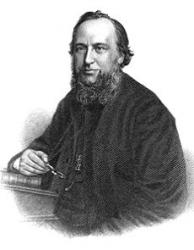
John Julian (1839–1913) was the preeminent hymnologist of the English-speaking world, a man whose tireless scholarship transformed the study of Christian song from a casual hobby into a rigorous academic discipline. Born in Cornwall and educated at Durham University, Julian served as a dedicated clergyman in the Church of England for nearly fifty years, most notably as the Vicar of Wincobank and later Topcliffe. While he was a respected pastor and a recipient of a doctorate from the Archbishop of Canterbury, his enduring legacy is not found in his sermons, but in his monumental contribution to reference literature. He was the architect of the "hymnologist’s bible," a work of such staggering detail that it remains the foundational text for the field more than a century after his death.
Julian’s magnum opus, the "Dictionary of Hymnology" (first published in 1892), was a feat of bibliographical endurance that occupied much of his professional life. This massive volume aimed to document the origin and history of Christian hymns across all ages and nations, providing biographical and critical notices for thousands of authors and translators. To compile it, Julian coordinated a global network of correspondents and researchers, functioning much like a modern-day database editor. The dictionary meticulously traced the "genealogy" of hymns, identifying original texts, noting unauthorized alterations, and cataloging translations into dozens of languages. It was a project that brought scientific precision to the often-sentimental world of church music, separating historical fact from pious legend.
Beyond the dictionary, Julian was a prolific writer on the liturgical use of music, publishing works such as Concerning Hymns (1874) and History of the Use of Hymns in Public Worship (1894). He was also a passionate collector of carols and ancient manuscripts, eventually donating his vast personal library to the Church House in London to ensure that future scholars would have access to primary sources. His work was characterized by a "sacred accuracy," as he believed that the history of a hymn was a vital part of the church’s broader theological heritage. He was less interested in personal fame than in the integrity of the record, often working behind the scenes to correct the errors of previous collectors.
The influence of John Julian is felt every time a modern hymnal editor checks a "Date of Composition" or an "Original Text" credit. His dictionary established the standard for how hymnological data is organized and presented, and its subsequent revisions have kept his scholarship relevant for generations of students and church musicians. When he passed away in Yorkshire in 1913, he left behind a discipline that he had largely built from the ground up. He remains the definitive "biographer of songs," a scholar who ensured that the voices of thousands of hymn-writers would be preserved with the dignity and precision their work deserved.
From the Dictionary of Hymnology
Related terms and topics automatically matched to this author.
Almighty God, Thy sovereign power Hymnology
Background of John Julian's offertory hymn "Almighty God, Thy sovereign power."
Read moreAnother year has passed away Hymnology
An entry on an anonymous Sunday school hymn for the New Year.
Read more