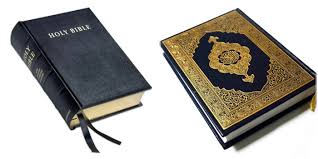
What Does the Bible Say About the Quran?
Christians living in a religiously diverse world often ask how the Bible relates to other "sacred" texts, especially the Quran. Islam claims the Quran is a final revelation from God, given through the prophet Muhammad. Christianity, however, rests on the conviction that God has spoken fully and finally through Jesus Christ and that the Bible alone is the inspired Word of God. While the Bible does not mention the Quran by name, it provides clear principles that allow Christians to evaluate any later religious message or scripture.
This article examines what the Bible teaches that is relevant to understanding the Quran, focusing on revelation, prophecy, the nature of God, the person of Jesus Christ, and the finality of Scripture.
1. The Finality of Biblical Revelation
The Bible consistently teaches that God has revealed Himself definitively through His Son, Jesus Christ.
Hebrews 1:1–2 (KJV) says:
“God, who at sundry times and in divers manners spake in time past unto the fathers by the prophets, Hath in these last days spoken unto us by his Son.”
This passage is foundational. It teaches that while God spoke in various ways in the past, His ultimate and final revelation is in Jesus Christ. Christianity holds that no later prophet or book can supersede or correct what God has already revealed in His Son.
The Quran, written more than six centuries after Christ, presents itself as a continuation and correction of earlier revelations. Biblically speaking, this claim conflicts with the New Testament teaching that God’s revelation in Christ is complete and sufficient.
2. Warnings Against Later or Different Revelations
The Bible explicitly warns believers against accepting later messages that contradict the gospel already delivered.
Galatians 1:8–9 (KJV) states:
“But though we, or an angel from heaven, preach any other gospel unto you than that which we have preached unto you, let him be accursed.”
This warning is striking. Paul includes even angelic revelations as something to be rejected if they present a different gospel. According to Islamic tradition, the Quran was delivered to Muhammad by the angel Gabriel. From a biblical perspective, the source alone does not validate the message. The content must align with the gospel of Christ already revealed.
The Bible teaches that the standard for truth is not newness, spiritual experience, or supernatural claims, but faithfulness to the revelation of Christ.
3. The Person of Jesus Christ
One of the clearest differences between the Bible and the Quran concerns Jesus Christ.
The Bible teaches that Jesus is the eternal Son of God, fully God and fully man.
John 1:1 (KJV) says:
“In the beginning was the Word, and the Word was with God, and the Word was God.”
John 1:14 (KJV) adds:
“And the Word was made flesh, and dwelt among us.”
The Quran, however, denies the deity of Christ, rejects His crucifixion, and views Him as a prophet rather than the Son of God. From a biblical standpoint, denying the true identity of Jesus is not a minor theological difference. It is foundational.
1 John 2:22–23 (KJV) says:
“Who is a liar but he that denieth that Jesus is the Christ? He is antichrist, that denieth the Father and the Son.”
According to Scripture, any teaching that denies the Son as revealed in the gospel cannot come from God, regardless of its moral teachings or religious sincerity.
4. The Nature of God
Both the Bible and the Quran claim belief in one God, but they describe God differently.
The Bible reveals God as triune, Father, Son, and Holy Spirit.
Matthew 28:19 (KJV) says:
“Go ye therefore, and teach all nations, baptizing them in the name of the Father, and of the Son, and of the Holy Ghost.”
The Quran explicitly rejects the Trinity. Biblically, this rejection is not merely philosophical but theological. The doctrine of the Trinity is rooted in God’s self revelation, not human speculation.
The Bible teaches that knowing God is inseparable from knowing Christ.
John 14:6 (KJV) says:
“I am the way, the truth, and the life: no man cometh unto the Father, but by me.”
Any system that denies Christ’s divine role denies the biblical understanding of God Himself.
5. Salvation and the Gospel Message
The Bible teaches salvation by grace through faith, based on the finished work of Christ.
Ephesians 2:8–9 (KJV) says:
“For by grace are ye saved through faith; and that not of yourselves: it is the gift of God: Not of works, lest any man should boast.”
The Quran teaches a system of salvation based largely on works, obedience, and divine judgment without assurance of redemption.
From a biblical perspective, this is a different gospel entirely. Scripture teaches that human effort cannot reconcile sinners to a holy God.
Romans 3:24 (KJV) says believers are “justified freely by his grace through the redemption that is in Christ Jesus.”
Any message that replaces grace with works, or the cross with moral effort, contradicts the heart of the biblical gospel.
6. Testing Spirits and Teachings
The Bible commands believers to test religious claims.
1 John 4:1 (KJV) says:
“Beloved, believe not every spirit, but try the spirits whether they are of God.”
Christians are not instructed to accept religious teachings simply because they claim divine origin. Every teaching must be measured against Scripture.
The Bible presents itself as sufficient and complete.
2 Timothy 3:16–17 (KJV) says:
“All scripture is given by inspiration of God, and is profitable for doctrine, for reproof, for correction, for instruction in righteousness.”
The Quran claims authority equal to or greater than Scripture. The Bible does not allow for this possibility.
7. Respect for People Without Compromising Truth
While the Bible rejects contradictory revelations, it also commands love, respect, and gentleness toward all people.
1 Peter 3:15 (KJV) says:
“Be ready always to give an answer to every man that asketh you a reason of the hope that is in you with meekness and fear.”
Christians are called to love Muslims as neighbors and fellow image bearers of God, while firmly holding to biblical truth. Rejecting the Quran as divine revelation does not mean rejecting people.
Jesus Himself modeled truth spoken in love.
8. The Bible’s Exclusive Authority
The Bible consistently presents itself as the final authority for faith and practice.
Psalm 19:7 (KJV) says:
“The law of the LORD is perfect, converting the soul.”
Jude 1:3 (KJV) speaks of “the faith which was once delivered unto the saints.” The phrase once delivered indicates completeness, not an ongoing chain of new revelations.
From a biblical worldview, any later book that claims to correct or complete Scripture must be rejected.
The Bible does not mention the Quran by name, but it provides clear criteria by which all religious claims must be evaluated. According to Scripture, God’s final revelation is in Jesus Christ. Any message that denies His deity, rejects His crucifixion, alters the gospel of grace, or claims equal authority with Scripture cannot be from God.
Christians, therefore, must conclude that the Quran is not divine revelation. This conclusion should be held with humility, compassion, and love, never with arrogance or hostility.
The Bible calls believers to stand firmly on truth while extending grace to all. Faithfulness to Christ requires both conviction and charity. The Word of God remains sufficient, complete, and authoritative for all matters of faith and salvation.





No comments yet. Be the first to share your thoughts!