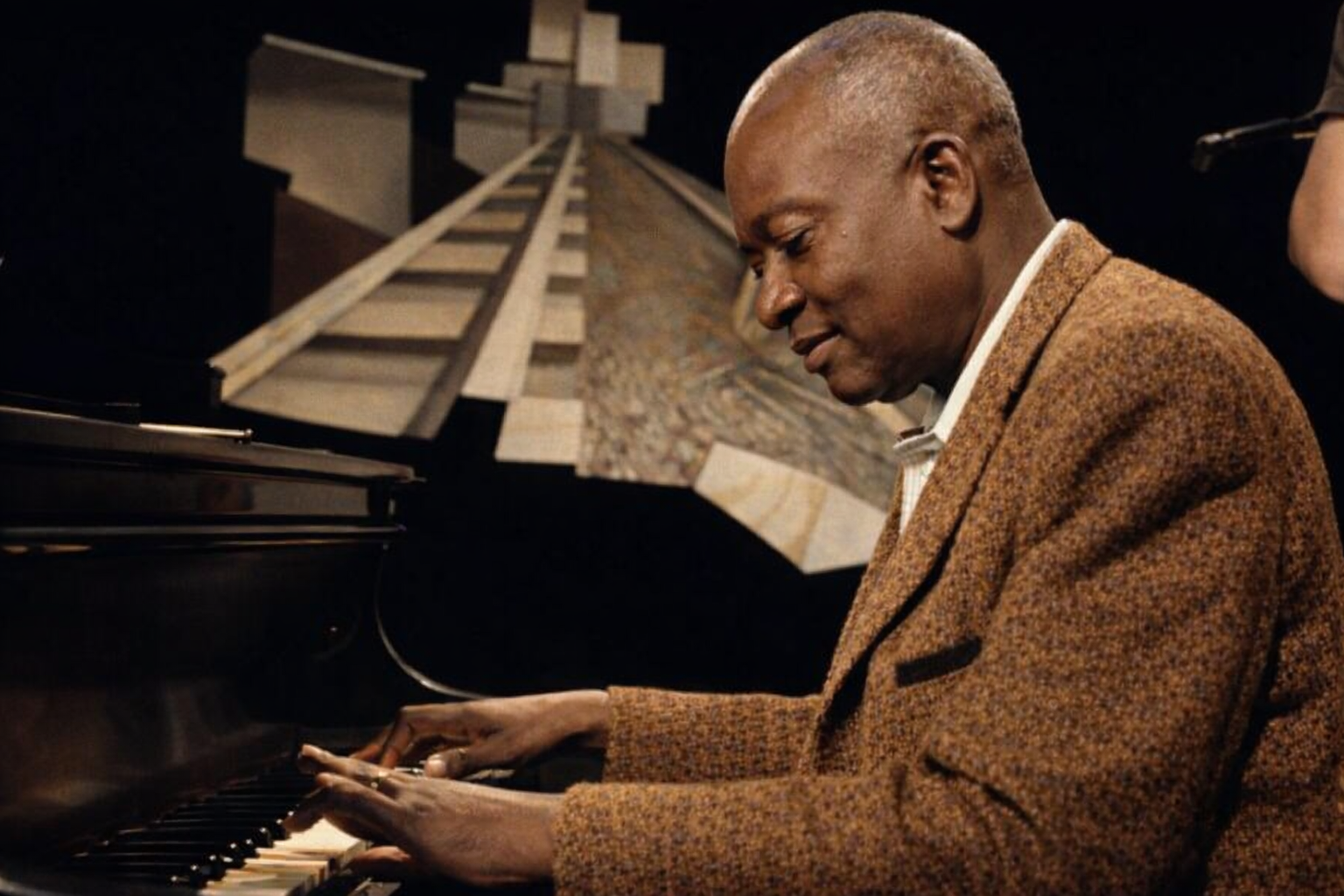
The Story Behind “Precious Lord, Take My Hand” Hymn
Few gospel songs carry as much sorrow, comfort, and history as “Precious Lord, Take My Hand.” The hymn has comforted grieving hearts, steadied civil rights marches, and found its way into pulpit and concert hall alike. It began in a moment of personal tragedy, was shaped by a musician who bridged blues and church music, and later became a public anthem of hope and perseverance. Below is the story behind the hymn, its musical roots, and why it still moves believers today.
A Song Born from Tragedy
Thomas Andrew Dorsey did not sit down to write “Precious Lord, Take My Hand” as a songwriter looking for inspiration. He wrote it as a broken man who had just buried his family.
In the summer of 1932, Dorsey was living in Chicago and working tirelessly as a musician and gospel composer. Though he had begun dedicating his life to music, he was still struggling financially and professionally. Gospel music itself was not yet widely accepted in traditional churches, and Dorsey often faced resistance, criticism, and rejection. At the same time, his personal life seemed to be stabilizing. He was newly married to Nettie Harper, a young woman he deeply loved, and she was pregnant with their first child.
In August of that year, Dorsey traveled out of town to St. Louis to attend a National Baptist Convention, where he was scheduled to perform and promote gospel music. This was a significant opportunity for him. Gospel music was still fighting for legitimacy, and Dorsey believed God was opening doors. Leaving Nettie behind in Chicago was difficult, especially because her pregnancy was near full term, but there was no indication that anything was seriously wrong.
While Dorsey was away, tragedy struck without warning.
During childbirth, Nettie went into sudden complications. Medical care at the time was limited, especially for Black families. The doctors could do very little. Nettie died during labor. Their baby boy survived only a few hours before also passing away.
While Dorsey was still at the convention, someone found him and handed him a telegram. The message was brief and devastating. It informed him that his wife had died. It did not initially mention the baby. Dorsey was stunned. He left immediately and rushed back to Chicago.
When he arrived home, the full weight of the loss fell upon him. Not only was his wife gone, but the child he had never held was also dead. Within the span of a single day, Dorsey lost his entire family.
He buried them together.
Friends later recalled that Dorsey was inconsolable. He questioned God. He wept uncontrollably. He could not reconcile his faith with the pain he was experiencing. He had devoted his music to the Lord, yet God had allowed this suffering. For a time, Dorsey walked away from music entirely. The piano that had once been his livelihood and his ministry now felt unbearable to touch.
This is an important detail. “Precious Lord” was not written immediately in the moment of shock. It emerged after silence, after numbness, after grief had settled into the bones. Dorsey later explained that he felt completely empty, unable to pray in normal words. His theology did not disappear, but it was stripped of ornament. What remained was a single plea.
When Dorsey finally sat at the piano again, he did not begin with music theory or structure. He began with a cry. The words came slowly, almost as prayer rather than composition.
“Precious Lord, take my hand
Lead me on, let me stand
I am tired, I am weak, I am worn”
Those lines were literal. Dorsey was exhausted in body, mind, and soul. The hymn does not attempt to sound strong. It admits weakness without embarrassment.
When he wrote,
“Through the storm, through the night
Lead me on to the light”
He was not speaking metaphorically. His world had gone dark. He was asking God simply to guide him through the next step, the next breath, the next day.
The most revealing line comes at the end.
“Take my hand, precious Lord, lead me home”
For some, “home” sounds like heaven. For Dorsey, it also meant emotional survival. He was asking God not only to lead him ultimately to eternal rest, but to lead him back to a place where life was livable again.
This is why the hymn does not explain suffering. It does not resolve it. It entrusts it.
Dorsey never claimed that writing the song healed his grief. What it did was give his grief a place to go. Instead of turning away from God, he turned toward Him with nothing left but need.
That is what gives the hymn its lasting power.
It is a wounded believer placing his hand into God’s hand because he cannot stand alone anymore.
That is why people sing it at funerals.
That is why it carried the weight of the civil rights movement.
That is why it still works when sermons fail.
And that is also why, nearly a century later, when people are too tired to pray, too broken to explain, and too weak to pretend, they still find themselves whispering the same plea Thomas Dorsey once whispered through tears:
The Composer: Father of Modern Gospel
Thomas A. Dorsey is often called the father of modern gospel music because he brought together the emotional directness of blues and the theological depth of church music. Before he devoted himself to sacred music, Dorsey worked as a blues pianist, sometimes performing under the name Georgia Tom. In the 1920s and 1930s he began composing, arranging, and leading gospel choirs in Chicago. His background allowed him to shape a musical language that communicated to both the head and the heart.
Dorsey’s personal story matters to the hymn. He knew both secular and sacred worlds, and he learned how to craft music that would speak to the sorrowing while pointing them to Christ.
Where the Melody Came From
Musically, “Precious Lord” is rooted in a much older hymn tune tradition. Dorsey adapted the melody from a Protestant hymn tune called Maitland, by George N. Allen, a tune familiar from the hymn “Must Jesus Bear the Cross Alone.” In other words, Dorsey married a time tested hymn melody and a newly written, intensely personal lyric. That blend allowed the song to feel both new and familiar to churchgoers.
The result is a melody that supports the lyric’s pleading quality. It is spare enough to allow pause and reflection, yet sturdy enough to carry communal singing.
Publication and Early Recordings
Dorsey copyrighted the hymn in the late 1930s and it began to spread through gospel choirs and early recordings. By the 1930s and 1940s the song was appearing in church songbooks and on records by gospel groups. Its accessibility to both soloists and congregations helped it travel quickly beyond Chicago to the wider American church and beyond.
Mahalia Jackson and the Civil Rights Era
“Precious Lord” moved from church hymn to cultural touchstone in no small part because of Mahalia Jackson, whose intensely spiritual performances popularized the song and associated it with the civil rights movement. Dr. Martin Luther King Jr. named “Precious Lord” as one of his favorite songs. He often asked Mahalia Jackson to sing it at rallies and events, because its plaintive plea and steady hope helped steady the crowd’s resolve in perilous times. On April 4, 1968, moments before his assassination, King asked musician Ben Branch to play the song that night at a rally. Mahalia Jackson sang the hymn at his funeral, and it became forever linked with that season of sorrow and resolve.
That association gave the hymn a public, prophetic profile. It was no longer only a private comfort; it functioned as communal lament and as a cry for guidance in the face of injustice.
A few practical reasons explain the hymn’s staying power.
-
Sincere Simplicity. The lyric is direct and unadorned. It does not abstract away pain. It names fear and asks for help. That honesty makes it usable in many contexts: graveside, revival, protest, or private devotions.
-
Melodic Accessibility. The tune is singable for congregations and adaptable for soloists. A powerful soloist can extend and ornament it, while a congregation can join simply and meaningfully.
-
Theological and Pastoral Depth. The song prays for guidance, presence, and homecoming. Those are biblical longings. The hymn echoes the Psalms of lament and trust, where petition and praise sit side by side.
-
Cultural Memory. Through iconic performances and historic moments, the hymn has become part of public memory. That context reinforces its emotional and spiritual power.
How Churches Use the Song Today
 Churches sing “Precious Lord” in many settings: funerals, times of corporate lament, memorial services, and occasional worship services that want to emphasize trust in suffering. It is often used as a song of lament that turns quickly toward hope. Pastors and worship leaders choose it when they want music that permits grief while pointing the congregation toward the Lord’s leading.
Scripturally, its sentiments find echoes in passages such as Psalm 23 and Hebrews 6:19, which speaks of hope as an anchor of the soul. The hymn gives voice to the very human longing in Psalm 34:18, that “the Lord is nigh unto them that are of a broken heart” (KJV).
“Precious Lord, Take My Hand” is more than a song. It is a testimony to how God can receive the brokenness of a life and use that honesty to comfort millions. Thomas Dorsey wrote it from the depths of personal grief. Later, Mahalia Jackson and others sang it into public sorrow. The hymn has comforted individual mourners and strengthened movements seeking justice. That twofold role, private and public, is one reason it remains a standard of American and global hymnody.




No comments yet. Be the first to share your thoughts!