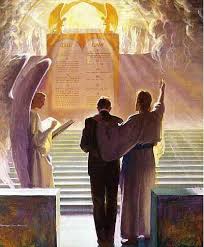
A Theological Exploration of Christ’s Present Ministry
The Living Christ at Work
We rightly celebrate what Jesus has done, and we rightly long for what He will do. The cross is finished, and the return is sure. Yet Scripture insists that Christ is not absent from our present experience. He is acting right now, in ways that matter for our assurance, perseverance, holiness, and hope. This article explores the biblical picture of Christ’s present ministry, focusing on three interlocking motifs, courtroom imagery, priestly intercession, and propitiation, and then draws pastoral implications for the Christian life.
Heaven as a Courtroom, and Christ as Advocate
John writes with urgent pastoral care, “My little children, these things write I unto you, that ye sin not. And if any man sin, we have an advocate with the Father, Jesus Christ the righteous” (1 John 2:1, KJV). The Greek word translated advocate is paraklētos, a legal term describing a defender, an authorized representative who pleads the cause of another. John intentionally places us in a juridical setting, where accusations and judgments are real.
The cosmic prosecutor is not a metaphor only, Revelation says, “the accuser of our brethren… which accused them before our God day and night” (Revelation 12:10, KJV). Satan does not merely shout slanders; he brings charges grounded in the holy law of God. He points to failures, omissions, and sins, and he appeals to the law’s demand that sin be punished.
Into this scene Christ stands as our paraklētos. He neither masks nor minimizes guilt. Rather, He answers with the decisive facts of the gospel. In court the defense must offer lawful grounds for acquittal. Christ does exactly that, not by begging for clemency, but by invoking the finished work of atonement. He presents Himself and His righteousness as the lawful basis on which God may and must declare the believer free from condemnation.
Paul makes the same point with triumphant questions, “Who shall lay any thing to the charge of God’s elect? It is God that justifieth. Who is he that condemneth? It is Christ that died, yea rather, that is risen again, who is even at the right hand of God, who also maketh intercession for us” (Romans 8:33–34, KJV). The forensic verdict is unambiguous. The one who could condemn has already died for sin, and the one who now sits at God’s right hand intercedes on behalf of the redeemed.
Christ Our High Priest, Continuously Interceding
The judicial picture is complemented by the priestly. Hebrews insists that Jesus is a priest in the order of Melchizedek, a priesthood that is both permanent and effective. The author of Hebrews affirms, “Wherefore he is able also to save them to the uttermost that come unto God by him, seeing he ever liveth to make intercession for them” (Hebrews 7:25, KJV). Jesus’ priesthood is not merely an occasional appeal. It is persistent, ongoing, and pastoral.
Two crucial distinctions protect orthodox doctrine here. First, the efficacy of Christ’s atoning death is once and for all. Hebrews teaches repeatedly that Christ offered one sacrifice for sins, once for all, and that no further offering is needed for atonement. See for example Hebrews 10:10,14, in which the sacrifice of Christ perfects those who are sanctified. Second, Christ’s intercession is distinct from His sacrifice. He does not reoffend or reoffer Himself. Instead He applies and pleads the merit of His one perfect work before the Father. His intercession is the effectual application of atonement, the present outworking of the finished sacrifice.
Thus the believer’s standing before God has two complementing realities, objective and ongoing. Objectively the cross declares us righteous, for the penalty for sin has been borne. Ongoing, Christ pleads that declaration in the life of the believer, so that accusations are answered, and access to the Father remains open.
Propitiation, Satisfaction, and the Nature of Forgiveness
John also uses the word translated propitiation, from the Greek hilasmos or hilasterion, which centers on the satisfying of divine justice. To say Christ is our propitiation is to assert that His death exhausts the wrath of God on sin, so that God’s justice is honored and His mercy may be displayed without injustice. Propitiation is not a legal trick, nor is it a moral compromise. It is the divine economy in which righteousness and mercy meet at the cross.
Different theological traditions frame this reality in various ways, including satisfaction theory, penal substitution, and Christus Victor. These emphases are complementary, not irreconcilable. Penal substitution highlights that Christ receives and endures the penalty which justice requires, so the sinner may be declared righteous. Christus Victor emphasizes Christ’s triumph over sin, death, and the powers that accuse and enslave. Taken together, Scripture teaches that Christ’s death satisfies justice, defeats the powers of evil, and secures the believer’s reconciliation with God.
This has a practical import. Forgiveness is not God suddenly ignoring sin. Forgiveness is God honoring the payment made by Christ. Paul’s logic in Romans 8 is exact, for if Christ has died and risen and now intercedes, who can legitimately condemn? To punish the same sin twice would violate the just order that God Himself upholds. God’s mercy in forgiving believers is therefore grounded in the righteousness of Christ, not in fickle favor.
The Past, Present, and Future of Christ’s Work
Three tenses of Christ’s work are visible and necessary. The past is accomplished, the cross and resurrection securing atonement and victory. The present is active, with Christ reigning and interceding at God’s right hand. The future is assured, when Christ returns to put all enemies under His feet and consummate redemption.
These tenses are not opposed. The present ministry of Christ is the application of the past accomplishment, and the guarantee of the future consummation. Hebrews 4:14–16 and Hebrews 9 remind us that because Christ has entered into the heavenly sanctuary, believers now may approach the throne of grace with confidence. Because He ever lives to make intercession, we may persevere and hope.
Practical Implications
This doctrine should change how Christians live day to day. Consider several practical consequences.
-
Assurance, not presumption. The advocacy of Christ gives confidence that our salvation is secure. Romans 8:1 declares, “There is therefore now no condemnation to them which are in Christ Jesus” (KJV). This assurance should not become a license to sin. John writes these truths in order that we sin not. Assurance produces gratitude and holiness, not carelessness.
-
Repentance out of relationship. When we sin, our confession is not aimed at reestablishing favor, but at restoring fellowship. We confess because Christ already defends us. Confession is pastoral and therapeutic, it clears the conscience, and it renews communion with God.
-
Courage under accusation. When believers face inner guilt, false accusation, or spiritual warfare, we remember there is a divine Defender who answers every charge. This truth counters despair and fosters perseverance in trials.
-
Worship rooted in objective grace. The doctrine of propitiation moves worship from self-help to doxology. We sing and pray in wonder at a Savior whose blood satisfies justice and wins mercy for us.
-
Church discipline, not replacement. Local churches must still pursue holiness, admonish the wayward, and exercise discipline when necessary. Christ’s advocacy does not remove the need for accountability. It ensures that discipline aims to restore, not to execute a final condemnation which only God has authority to render.
Common Objections and Clarifications
Some misunderstand Christ’s advocacy as a legalistic fiction, imagining a God who is tricked or coerced. That is not biblical. The atonement honors God’s justice and satisfies His righteous wrath. Others reduce Christ’s present ministry to a vague sense of presence. Scripture is precise, using legal and sacerdotal images deliberately. We should hold both the forensic and the pastoral together. Finally, advocacy is not an excuse for neglecting sanctification. John’s pastoral concern is explicit, for he writes to encourage holy living.
Resting in a Finished and Living Savior
Christ is not dormant. He reigns, He pleads, He applies His atoning work, and He secures the final acquittal of those who trust Him. The courtroom of heaven is real. There is a prosecutor who points to our sin, and there is a Redeemer who answers with the full weight of His blood and righteousness. This is not abstract theology. It is the daily assurance of every struggling soul. It is the bold ground from which the Christian prays, confesses, perseveres, and worships.
A final word for troubled hearts, from Scripture itself, “Who shall lay any thing to the charge of God’s elect? It is God that justifieth. Who is he that condemneth? It is Christ that died, yea rather, that is risen again, who is even at the right hand of God, who also maketh intercession for us” (Romans 8:33–34, KJV). Rest in that present work of Christ, and let it shape your obedience, your hope, and your praise.




No comments yet. Be the first to share your thoughts!