About Henry F. Chorley
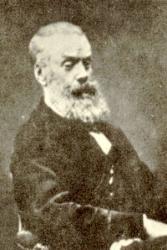
Henry Fothergill Chorley (1808–1872) was a formidable and often polarizing figure in the Victorian cultural landscape. Born in Lancashire and largely self-educated through private tutors and the intellectual circles of Liverpool, he moved to London and became one of the most influential critics of his time. For over 35 years, he served as the literary and music critic for the London Athenæum, where his reviews could make or break a career. Known for his "eccentric" personality and striking red hair, Chorley was a man of fierce integrity and even fiercer opinions.
Chorley was a staunch conservative in musical matters. He is famously remembered for his persistent opposition to innovators like Robert Schumann and Richard Wagner, whose music he labeled as "decadent." His sharp tongue and high-pitched voice made him a target for satire; most notably, the composer Charles Gounod originally intended his "Funeral March of a Marionette" to be a parody of Chorley’s stiff and peculiar movements. Ironically, that piece of music would find global immortality nearly a century later as the theme for Alfred Hitchcock Presents.
Despite his abrasive reputation as a critic, Chorley was a deeply connected member of the London literati, counting Charles Dickens, Elizabeth Barrett Browning, and Felix Mendelssohn among his close friends. His literary output was vast, encompassing novels like Pomfret and Roccabella, numerous plays, and opera librettos. He even edited the Ladies’ Companion, showcasing a surprising versatility that touched on fashion and domestic life.
In the world of hymnody, Chorley is primarily remembered for a single, powerful contribution. In 1842, he wrote the lyrics to "God the Omnipotent!" (originally titled "The Russian Hymn"). Written during a time of international tension, the hymn was set to Alexis Lvov's melody for the Russian National Anthem. It became an enduring plea for peace, with its stirring refrain, "Give to us peace in our time, O Lord."
Chorley’s life ended in 1872, shortly after inheriting a fortune from his brother that allowed him a brief retirement. He was buried in Brompton Cemetery, leaving behind a legacy as a man who was often feared by performers but deeply respected by the intellectual elite. Though his novels have largely faded from the public consciousness, his prayer for peace continues to be sung in churches across the globe.