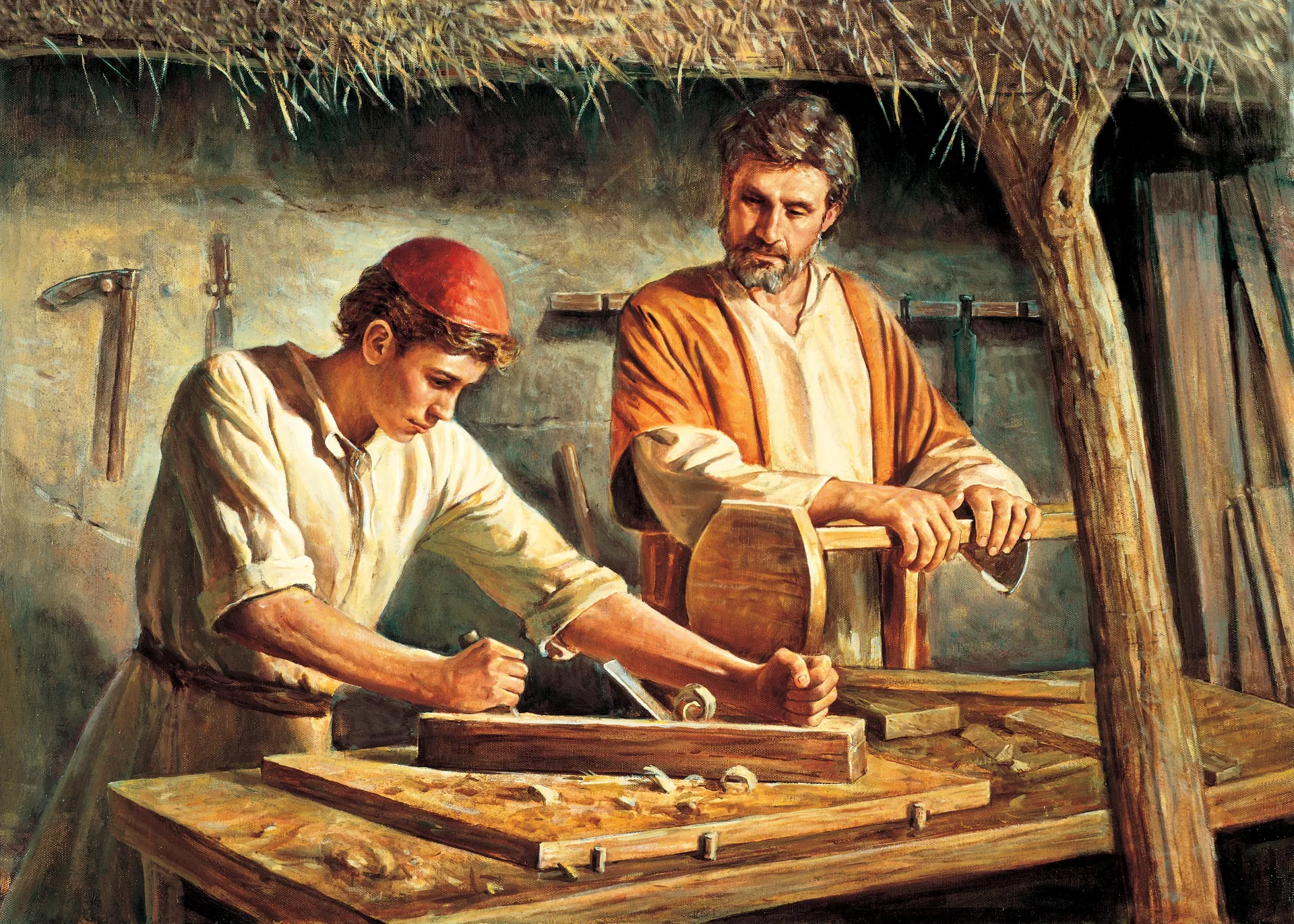
The Childhood of Jesus Christ - The Carpenter's Son
Although the Gospels do not give a large number of stories, the accounts we do have reveal significant truths about His identity, His mission, and the way God guided His early years. These passages demonstrate that the same divine care that surrounded His birth continued throughout His childhood, preparing Him for the ministry that would change the world.
After Joseph, Mary, and the infant Jesus returned from Egypt and settled in Nazareth, the family began living a simple life and faithful participation in Jewish customs. Nazareth was a small and somewhat insignificant village in Galilee, but it became the home where the Son of God grew in wisdom and strength. The decision to settle in Nazareth fulfilled prophetic expectations that the Messiah would be called a Nazarene, demonstrating once again that even the quiet years of childhood unfolded according to God's plan. Life in Nazareth involved daily routines centred on family work, worship in the synagogue, observance of festivals, and learning the Scriptures. Joseph, being a carpenter, would have taught Jesus the trade as Jewish fathers commonly trained their sons. Jesus grew up in an environment shaped by the rhythms of Jewish devotion, the reading of the Law and the Prophets, and the expectation of God’s promised redemption.
One of the earliest recorded events in Jesus' childhood is His presentation at the temple in Jerusalem. According to the Law of Moses, every firstborn male was to be dedicated to the Lord, and purification rites were observed for the mother. Joseph and Mary brought Jesus to the temple forty days after His birth. Although they offered the simple sacrifice of two turtledoves or pigeons, which was permitted for those who could not afford a lamb, their act revealed their devotion and obedience. In the temple, they met Simeon, a righteous man who had been waiting for the consolation of Israel. The Holy Spirit revealed to him that he would see the Messiah before he died. When he saw Jesus, he took Him in his arms and declared that he had seen God’s salvation, a light for the Gentiles and glory for Israel. Simeon also spoke directly to Mary, telling her that Jesus would bring the rise and fall of many and that a sword would pierce her own soul. Soon afterwards, Anna, an elderly prophetess who spent her days in prayer and worship, also praised God and spoke about the child to all who awaited redemption. These encounters affirmed that Jesus' childhood was surrounded by divine recognition and prophetic confirmation.
As Jesus grew, the Gospel of Luke records that He increased in wisdom, stature, and favour with God and man. This remarkable statement conveys both His true humanity and His sinless development. Jesus experienced normal human growth, learned as children learn, and yet did so without sin. The Son of God lived within the limitations of human childhood, revealing that the incarnation was complete and genuine. He interacted with family, neighbours, and the broader community, but His growth was marked by a unique harmony with the will of his Father in heaven.
The most detailed narrative of Jesus' childhood is the account of His visit to Jerusalem at the age of twelve. Every year, Joseph and Mary travelled to Jerusalem for the Passover feast, as faithful Jewish families were required to attend the major festivals. When Jesus turned twelve, He entered the age when Jewish boys began preparing for full responsibility under the Law. This made the Passover journey especially meaningful. After the feast ended, Joseph and Mary began the journey back to Nazareth with the group of travellers. They assumed Jesus was among the relatives and acquaintances who commonly travelled in large caravans for safety. Only later did they realise that He was not with the group. Distressed and anxious, they returned to Jerusalem to search for Him. After three days, they found Him in the temple, sitting among the teachers, listening to them, and asking questions. The teachers were amazed at His understanding and His answers. This scene reveals that Jesus had a deep awareness of His identity and His relationship with God the Father, even at a young age.
When His mother expressed her concern, Jesus responded by saying that He must be about His Father’s business. His words did not show disrespect but rather revealed the clarity of His mission and His devotion to the will of God. Joseph and Mary did not fully understand His statement at the time, but Mary treasured it in her heart as she had treasured the words spoken by angels and prophets earlier in His life. After this event, Jesus returned with His parents to Nazareth and continued to live in obedience to them. This obedience is significant, for it demonstrates His humility and His perfect righteousness. The Son of God submitted to the authority of earthly parents, fulfilling the Law in every detail.
The years that followed were quiet but deeply important. Jesus continued to grow physically and to advance in wisdom. He developed skills in daily work, participated in worship, and lived within the community. Although the Gospels do not mention miracles or displays of divine power during His youth, they emphasise that He lived a perfect human life, fully pleasing to the Father. The silence of this period teaches that God often works in hidden ways, preparing His servants through faithful living, ordinary responsibilities, and steady spiritual development.
The childhood of Jesus Christ forms a vital part of the story of salvation. It shows us that the incarnation involved true human experience, not only at His birth and in His ministry but also in His formation as a child, a youth, and a young man. The early years in Nazareth prepared Him for the public ministry that would come at the appointed time. Every step of His growth revealed the character of the Messiah who came to bring salvation to the world. The childhood accounts also remind believers that God works not only in mighty signs but also in the quiet seasons of life, shaping His purposes through obedience, family, worship, and faith.





No comments yet. Be the first to share your thoughts!