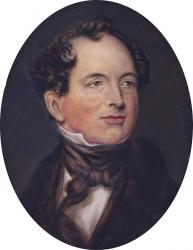
Thomas Moore
Hymn writer & lyricist
About Thomas Moore
Birth Year: 1779
Death Year: 1852
Thomas Moore (1779–1852) was an Irish poet, lyricist, and songwriter whose literary work gained wide recognition in the early nineteenth century. Although he is remembered primarily for his poetry and songs connected with Irish melodies, he also contributed several texts that entered Christian hymnody. Moore was born on May 28, 1779, in Dublin, Ireland. His father was a small tradesman and grocer. From an early age Moore showed an interest in music, poetry, and acting. He was educated at a private school and later attended Trinity College in Dublin, where he developed his literary abilities and began writing poetry.
After completing his studies at Trinity College, Moore entered the Middle Temple in London to study law. However, his interests remained focused more on literature and artistic pursuits than on legal practice. In 1800 he published translations of the works of the ancient Greek poet Anacreon. These translations celebrated themes of wine, music, and love and were dedicated to the Prince of Wales. During the same period he also wrote a comic opera titled The Gypsy Prince. In 1801 he released a collection of his own poetry under the title Poetical Works of the Late Thomas Little, Esq., which helped establish his reputation as a poet.
In 1803 Moore received a government appointment as registrar of the Admiralty Prize Court in Bermuda. The work did not interest him, and within a short time he appointed a deputy to perform his duties while he traveled through North America. During this journey he met many prominent individuals, including the American president Thomas Jefferson. After returning to England in 1804, Moore continued publishing poetry and essays, including Epistles, Odes, and Other Poems in 1806.
Moore became known for his sharp wit and involvement in literary and political debates. One of his critics, Francis Jeffrey of the Edinburgh Review, strongly attacked Moore’s writings. Moore responded by challenging Jeffrey to a duel, though the duel never took place and the two men eventually became friends. Moore was also involved in theatrical productions and occasionally appeared in plays, often performing comic roles.
In 1811 Moore married Elizabeth “Bessy” Dyke, an actress and the sister of one of his theatrical colleagues. Their marriage was initially kept secret from Moore’s parents because she was Protestant and had no dowry. Despite many hardships, their marriage was considered a happy one. The couple had five children, but sadly none of them survived into adulthood.
Moore later faced financial difficulties. The deputy he had appointed in Bermuda was discovered to have embezzled a large sum of money, and Moore became legally responsible for the debt. To avoid imprisonment for debt he traveled to France in 1819, where his family later joined him. Assistance from friends eventually helped settle part of the financial burden, allowing the family to return to England.
Among Moore’s many literary achievements were his widely admired lyrics written for Irish Melodies, a series of songs that celebrated Irish culture and music. His connection with hymnody came mainly through a collection titled Sacred Songs, published in 1816. These songs were written to popular melodies from different nations and reflected devotional themes. Although Moore wrote thirty two sacred songs, only a number of them entered hymnbooks, particularly in the United States. One of the most widely used hymns derived from his work is “Come, Ye Disconsolate,” which has been included in many Christian hymnals.
Moore also wrote historical works, including a four volume History of Ireland published between 1835 and 1846. This work strongly criticized English rule over Ireland and reflected Moore’s sympathy with Irish national concerns. He also wrote a well known biography of his friend Lord Byron, using memoir materials entrusted to him by the poet.
Thomas Moore died on February 26, 1852, at Bromham in Wiltshire, England. Though his primary fame rests on his poetry and Irish melodies, his sacred songs also left a lasting influence on Christian hymnody. Several of his hymn texts, especially “Thou Art, O God, the Life and Light” and “Come, Ye Disconsolate,” have continued to appear in hymnals and have been sung by congregations for many generations.
Hymns by Thomas Moore
| # | Title | Year | Views | |
|---|---|---|---|---|
| 1 | Come, Ye Disconsolate | 1831 | 1279 | View |
| 2 | Hark, the Vesper Hymn Is Stealing | 1816 | 297 | View |