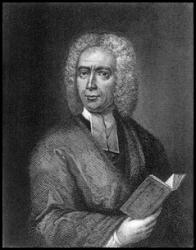
Martin Janus
Biography
|
Full Name: |
Janus, Martin (also known as Martin Jahn) |
|---|---|
|
Birth Year: |
circa 1620 |
|
Death Year: |
1682 |
|
Nationality: |
German |
|
Birthplace: |
Merseburg or Silesia (disputed) |
|
Occupation: |
Lutheran pastor, church musician, teacher, hymn writer and editor |
|
Denomination: |
Lutheran |
Martin Janus, also known as Martin Jahn, Jähn, or Jan, was a seventeenth-century German Protestant clergyman, church musician, teacher, and hymn writer. He was born around 1620, although historical biographical accounts differ concerning his birthplace, identifying either Merseburg or Silesia. He lived during a period of considerable religious conflict in the German territories, when the Counter-Reformation brought significant changes to Protestant communities. These circumstances shaped much of his life and ministry, repeatedly forcing him to leave places where he had established himself.
Janus studied theology at the University of Königsberg, where he was registered on March 14, 1644. After several semesters of theological study, he pursued church music and became a cantor and music director. He subsequently worked in Steinau before moving to Sorau in Lower Lusatia, where he served as music director at two Protestant churches. He was received there as a religious exile and received support from the local Protestant patron, Sigismund Seifried von Promnitz.
Around 1653, following the death of his patron, Janus moved to Sagan in Lower Silesia. There he became rector of the Evangelical school and served as a cantor. His responsibilities combined education, musical leadership, and the cultivation of Protestant religious life. He was particularly interested in sacred poetry and the musical presentation of hymns for Christian devotion.
Around 1664, Janus also became pastor at Eckersdorf, near Sagan. His ministry there, however, was interrupted by religious persecution. In 1668, an imperial decree ordered the expulsion of Protestant preachers and teachers from the Principality of Sagan. Janus was among those forced to leave. This expulsion was a significant turning point in his life and is traditionally associated with the composition of his best-known hymn.
After a period of searching for another appointment, Janus eventually settled in Ohlau, Silesia, where he obtained a position as cantor. He continued his musical and religious work there until his death around 1682.
Contribution to Hymnody
Martin Janus made an important contribution to seventeenth-century German Protestant hymnody, particularly through his work as a hymn writer, editor, and compiler of sacred music.
In 1652, he published a collection of fifty German Passion hymns with four-part musical settings. In 1663, he issued an expanded collection under the title Passionale melicum, containing approximately 250 Passion hymns. The collection included works by several prominent German religious poets, including Andreas Gryphius, Johann Rist, Angelus Silesius, David von Schweinitz, and Paul Gerhardt. It was intended primarily for private and domestic devotional use.
His best-known hymn is:
- Jesu, meiner Seelen Wonne, Jesu meine beste Lust (1665).
This hymn is particularly significant because it became the textual foundation for the famous chorale setting Jesu, Joy of Man's Desiring, associated with Johann Sebastian Bach. Bach incorporated two stanzas of Janus's hymn into his cantata Herz und Mund und Tat und Leben, BWV 147, using the chorale melody Werde munter, mein Gemüte, composed by Johann Schop.
The English translation, commonly known as Jesu, Joy of Man's Desiring, became widely recognized through Bach's musical setting. It is important to distinguish Janus's contribution as the hymn-text author from Bach's musical arrangement and Schop's original chorale melody.
Janus's hymn has also appeared in English translation under the title O at Last I've Found My Saviour. Its devotional emphasis is on the believer's love for Christ and the joy found in fellowship with Him.
Martin Janus remains an important figure in Lutheran hymnody, remembered especially for the hymn text that became internationally celebrated through Bach's music. His life also illustrates the difficulties experienced by Protestant ministers and musicians during the religious conflicts of seventeenth-century Central Europe.
Biographical note: His birthplace remains uncertain, and his birth and death dates are approximate. The date 1668 is traditionally associated with the composition of his famous hymn, although the text's documented publication appeared in 1665.
Dictionary of Hymnology
THEBESIUS, ADAM Biography
Silesian pastor-poet (1596–1652), son of Peter Thebesius of Seiffersdorf; Wittenberg M.A. 1617; Liegnitz pastor and consistory assessor. Chief hymn: “Du grosser Schmerzensmann” (Passiontide); tr. Russell, “Thou Man of Sorrows, hail!”
ReadHymns by Martin Janus
Includes hymns they wrote and hymns where they are credited as co-author, translator, paraphraser, adapter, or arranger.
| # | Title | Year | Views | |
|---|---|---|---|---|
| 1 | Jesus, Joy of Man's [Our] Desiring | 1661 | 2120 | View |
Recently added hymns
Updated hymnals
Suggestions or corrections: contact us.
Leave it in the forum for others to answer — hymn requests, lyrics help, writers, worship planning, and more.