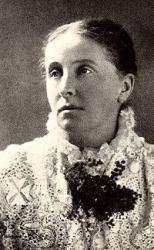
Ada Cambridge
Hymn writer & lyricist
About Ada Cambridge
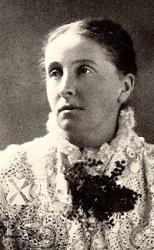
Ada Cambridge (1844–1926)
Ada Cambridge was an English born hymn writer, poet, and prose author whose devotional writings gained lasting recognition in nineteenth century Anglican worship. She was born November 21, 1844, at St. Germaine, Norfolk, England, the daughter of Henry Cambridge. From an early age she demonstrated literary ability, producing poetry and religious verse that reflected both theological depth and refined literary style.
In 1869, Ada Cambridge married George Frederick Cross, who was ordained in 1870 and served initially as a curate in England. Shortly afterward, the couple relocated to Australia, where George Cross held a series of Anglican curacies. In 1877, he became Incumbent of Coleraine in the Diocese of Ballarat, placing Ada Cambridge within the active life of the Anglican Church in colonial Australia. Her experience as a clergy wife shaped both her devotional writing and her understanding of parish worship, domestic piety, and the rhythms of the church year.
Ada Cambridge’s hymn writing emerged early in her life and was closely tied to Anglican liturgical themes. Her published collections include Hymns on the Litany (1865) and Hymns on the Holy Communion (1866), both of which reveal her sensitivity to worship, penitence, and sacramental theology. She also contributed hymns and poems to collections such as Lays of the Pious Minstrels (1862) and English Lyrics, demonstrating a literary range that extended beyond congregational song.
In addition to hymnody, Cambridge was active as a prose writer. She published a religious story titled “The Two Surplices” in 1865 and contributed short tales and literary pieces to various magazines. Her prose and poetry alike reflect a disciplined Anglican spirituality marked by reverence, moral seriousness, and pastoral concern. While she never pursued public fame, her work quietly circulated among readers who valued devotional literature shaped by clarity and restraint.
John Julian, in his authoritative Dictionary of Hymnology (1907), described Ada Cambridge’s hymns as being marked by sweetness and purity of rhythm, combined with naturalness and simplicity. These qualities made her hymns especially suitable for church use, domestic worship, and the seasons of the Christian year. Her texts often focus on humility, repentance, Christ’s redeeming work, and the sanctification of ordinary life through worship.
Among her best known hymns are “Humbly Now, with Deep Contrition” written for Lent, “Jesus, Great Redeemer, Source of Life Divine” for Holy Communion, “Light of the World, O Shine on Us” for domestic worship, “Savior, by Thy Sweet Compassion”, and “The Dawn of God’s Dear Sabbath”, which became her most widely used text and remains her best known hymn. These hymns have appeared in numerous hymnals and continue to be valued for their theological balance and lyrical grace.
Ada Cambridge died in 1926, leaving behind a modest but enduring body of hymn texts that continue to serve the church. Her work stands as a testament to the role of thoughtful devotional writers in shaping Anglican hymnody, particularly in the nineteenth century, where reverence, simplicity, and scriptural reflection were held in high esteem.
Hymns by Ada Cambridge
| # | Title | Year | Views | |
|---|---|---|---|---|
| 1 | The Dawn of God's Dear Sabbath | 1866 | 220 | View |